


In this article
Modulation is a change of tonal centre within a piece of music. A convincing key change usually establishes the new key through melody, bass, chords or a cadence. One unfamiliar chord alone does not necessarily mean the music has modulated.
Hear the examples.
Choose an example, then press Play. Compare the notes as well as the sound.
C–Am–D7–G
Am is shared by C major and G major. D7 introduces F♯ before G arrives.
These are not Captain Plugins audio.Ready to play
Decide why the key should change
A key change can separate a bridge from a verse, alter the singer’s register or give a repeated chorus a new setting. First try the section in both keys and check the vocal range. Moving upward does not automatically make the section more exciting.
Map the entrance and the return. A modulation affects pitched instruments and sustained tails, not just the chord track. A sample that cannot be retuned cleanly may influence which destination is practical.
Use a chord shared by both keys
To move from C major to G major, use C–Am–D7–G. Am is vi in C and ii in G, so it can serve as a pivot. D7 contains F♯, a note that points away from C major and toward the new G-major setting.
Continue in G long enough to establish it, for example with Em–C–D–G and a melody that settles on G. The short audio example demonstrates the transition, but the surrounding phrase decides whether listeners hear a lasting modulation.
Make a direct change at a phrase boundary
A direct modulation can introduce the new key without a shared pivot chord. Finish the phrase, leave a breath or drum fill, then begin the next section in the new key. Preserve the recognisable rhythm if you want the listener to connect both versions.
For a semitone-up chorus, transpose all its pitched parts by one semitone. Recheck the singer’s highest note, bass register and sample quality. Do not shift unpitched drum MIDI blindly, because that can trigger different drum sounds.
Separate modulation, tonicization and mixture
A secondary dominant can highlight a chord briefly without establishing a new key. In C major, D7–G followed by a return to C may simply tonicize G. Context and duration matter more than the presence of F♯ alone.
Changing from C major to C minor keeps the same tonic and changes its mode. Borrowing Fm within C major is even more local. These can create contrast without the same kind of tonal-centre change as moving from C to G.
Keep the notes in view.
| Technique | Example | What establishes it |
|---|---|---|
| Pivot chord | C–Am–D7–G | Am shared; F♯ and a G-centred continuation |
| Direct change | C-major section → D♭-major section | New section confirms D♭ |
| Brief tonicization | D7–G within C major | Music returns to C |
| Parallel-mode change | C major → C minor | Same tonic; altered third and other scale notes |
Try it in Captain Chords.
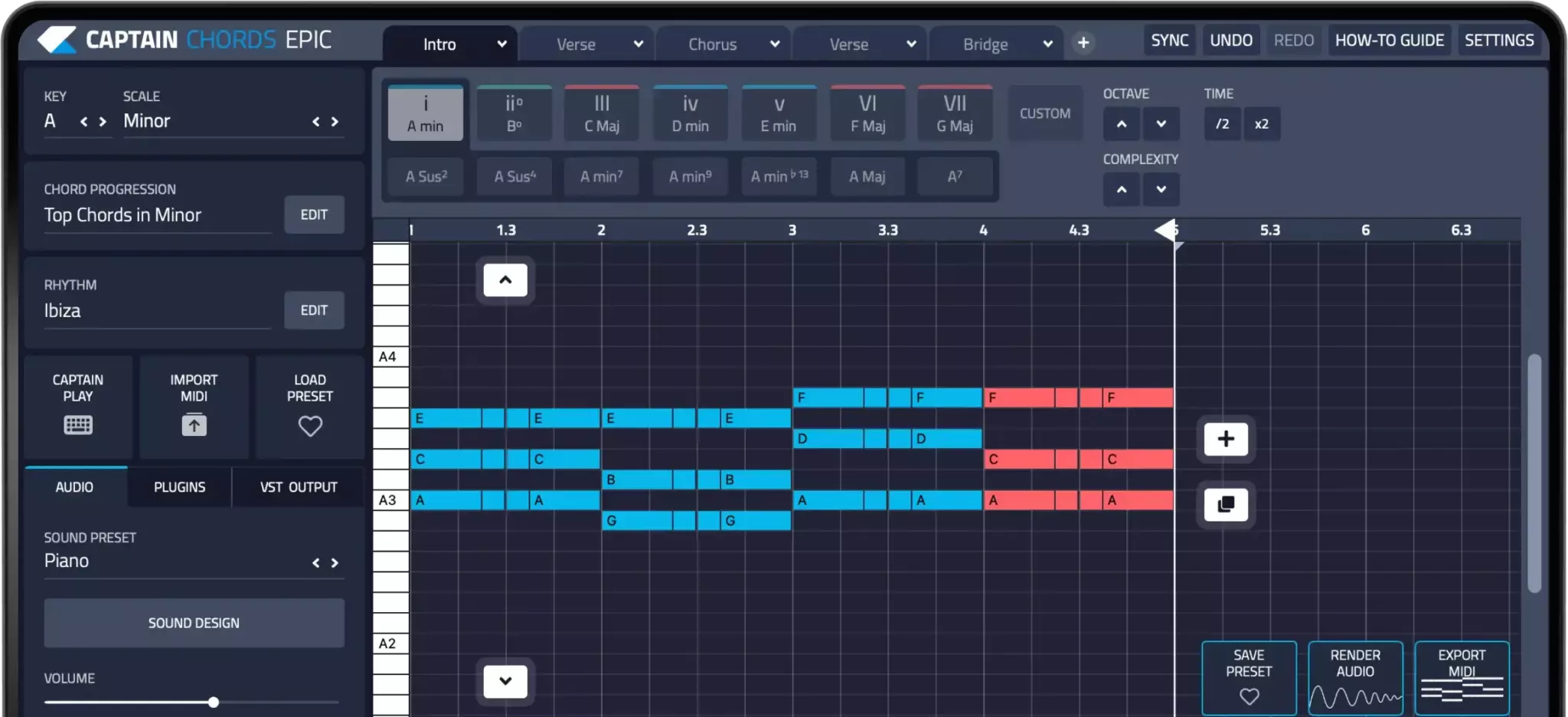
Build the original section and transition as separate sketches in Captain Chords. Check the exact notes in the pivot and dominant chords, then export MIDI and compare the full arrangement at the join.
See the current editing workflow.
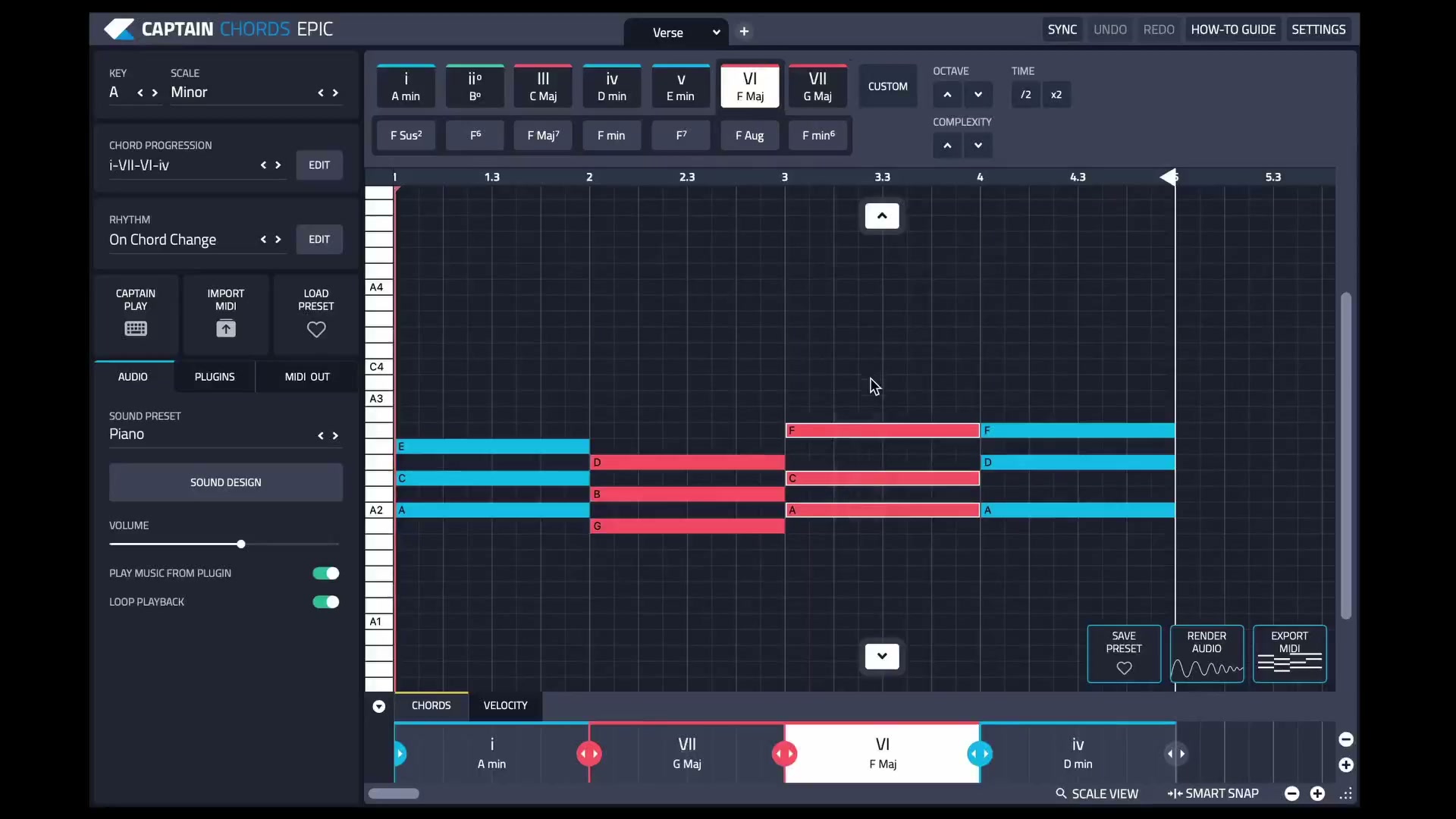
The Captain Plugins 8 update video shows the canvas and selection-based editing.
Common questions
Does every pair of keys share diatonic chords?
No. Closely related keys often share useful chords, but distant keys may need a different transition. Do not assume a common diatonic pivot always exists.
Is a secondary dominant a modulation?
Not necessarily. It can briefly emphasise a chord inside the original key. Listen to what the following phrase establishes.
Must I return to the original key?
No. The new key can continue to the end. Plan the structure and vocal range instead of assuming a return is required.