


In this article
A seventh chord adds a seventh above the root to a triad. Cmaj7 is C–E–G–B, C7 is C–E–G–B♭, and Cm7 is C–E♭–G–B♭. The type of third and seventh determines the chord quality.
Hear the examples.
Choose an example, then press Play. Compare the notes as well as the sound.
Cmaj7
A major triad with a major seventh: B natural.
These are not Captain Plugins audio.Ready to play
Count the seventh correctly
The word seventh describes a letter-name interval, not seven semitones or seven whole tones. From C up to B is a major seventh: eleven semitones. C up to B♭ is a minor seventh: ten semitones. Start from a triad and choose the seventh you actually want.
Compare Cmaj7 and C7 without changing the instrument or voicing. Only B moves to B♭, but the effect can be strong. Writing just “7” in a chord symbol conventionally means the dominant-seventh chord type, not a major seventh.
Give each seventh a job
Cmaj7 can add colour to a C-major harmony. Cm7 retains a minor third and adds a minor seventh. A dominant seventh such as G7 can lead strongly toward C: its B can rise to C while its F falls to E.
These are useful tendencies, not compulsory destinations. In blues and other styles, dominant-seventh chords may be used as stable colours. Judge the chord by what it does in the phrase instead of assuming its name dictates the next bar.
Try a connected three-chord phrase
Play Dm7–G7–Cmaj7. The notes are D–F–A–C, G–B–D–F and C–E–G–B. In C major this is ii7–V7–Imaj7. Keep shared notes where practical and move the remaining notes to nearby chord tones.
For a lean arrangement, let a separate bass play the roots while a keyboard focuses on the thirds and sevenths. This can clarify the harmonic movement without stacking every note low in the same register. Check the complete voicing before removing roots from a solo part.
Use extensions selectively
A ninth, eleventh or thirteenth can add another colour, but more notes do not automatically make a better chord. Start by adding one seventh to a progression you already like. Listen against the melody, especially when it holds a note close to the new seventh.
Diminished seventh and half-diminished seventh chords are different too. Cdim7 contains B𝄫, while Cm7♭5 contains B♭. B𝄫 sounds on the same key as A on an equal-tempered keyboard, but its spelling explains its role as a diminished seventh.
Keep the notes in view.
| Symbol | Notes | Semitones from root |
|---|---|---|
| Cmaj7 | C · E · G · B | 0 · 4 · 7 · 11 |
| C7 | C · E · G · B♭ | 0 · 4 · 7 · 10 |
| Cm7 | C · E♭ · G · B♭ | 0 · 3 · 7 · 10 |
| Cm7♭5 | C · E♭ · G♭ · B♭ | 0 · 3 · 6 · 10 |
| Cdim7 | C · E♭ · G♭ · B𝄫 | 0 · 3 · 6 · 9 |
Try it in Captain Chords.
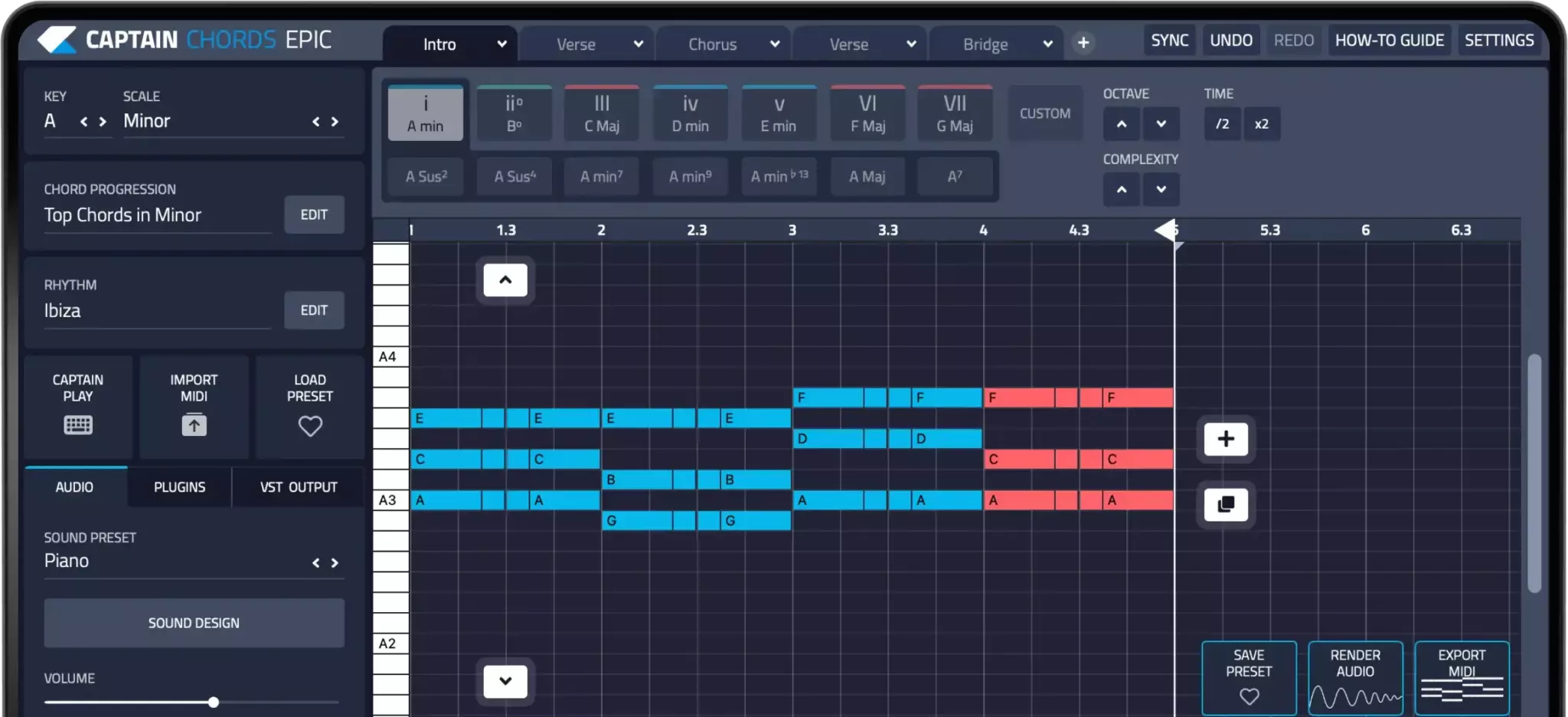
Start with Dm–G–C, then compare Dm7–G7–Cmaj7. Keep the same rhythm so you can judge the extra notes. Adjust the voicing before adding any further extensions.
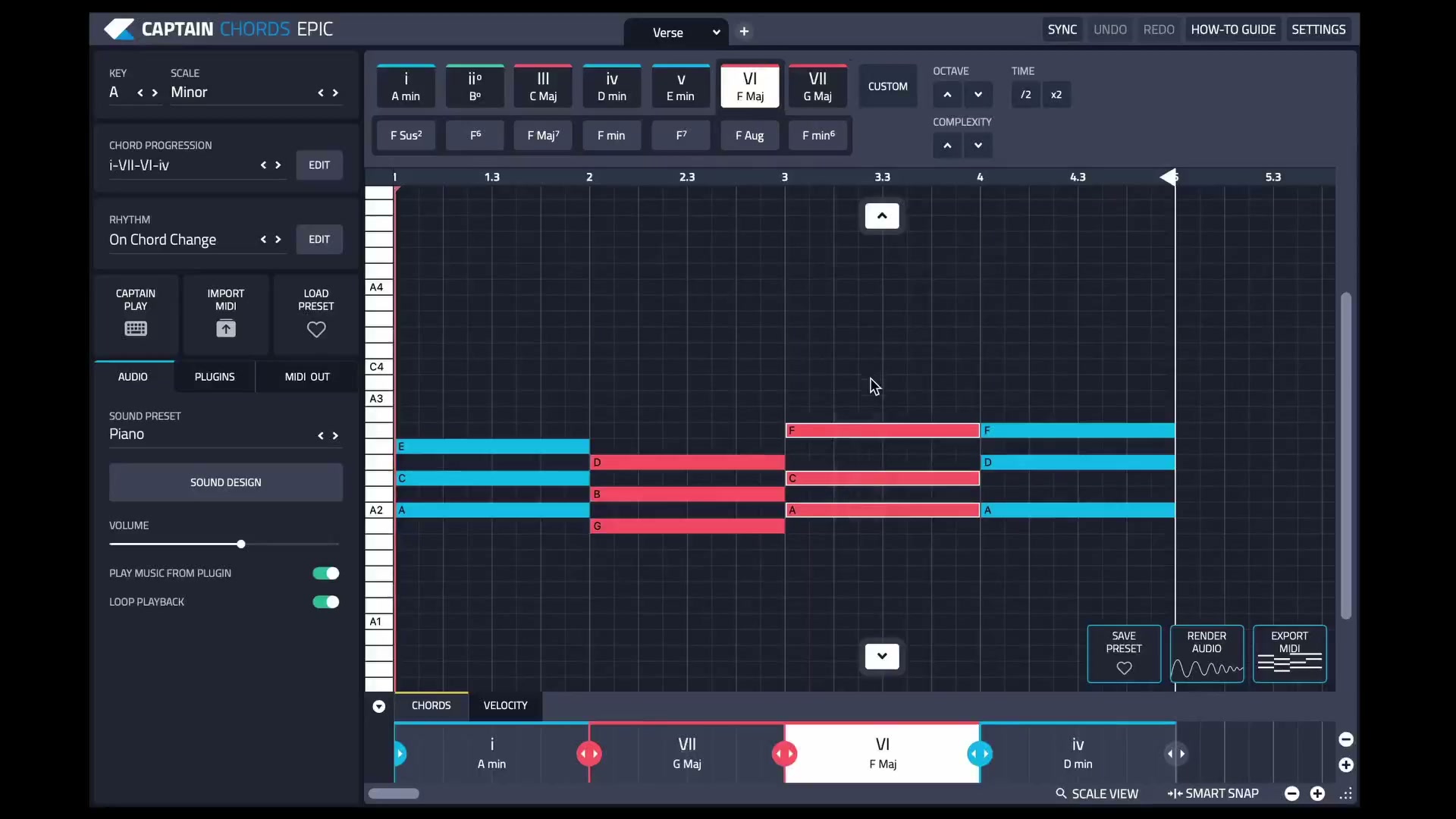
See the current editing workflow.
The Captain Plugins 8 update video shows the canvas and selection-based editing.
Common questions
Is a seventh seven semitones above the root?
No. A perfect fifth is seven semitones. A minor seventh is ten semitones and a major seventh is eleven.
Can I add a seventh to every chord?
You can try it, but choose the seventh deliberately and check the melody. A plain triad may give the arrangement more space.
What is a dominant seventh?
As a chord type, it is a major triad plus a minor seventh. When built on the fifth degree of a key, it often creates a strong pull toward the tonic.
Lesson and examples updated by Mixed In Key.