


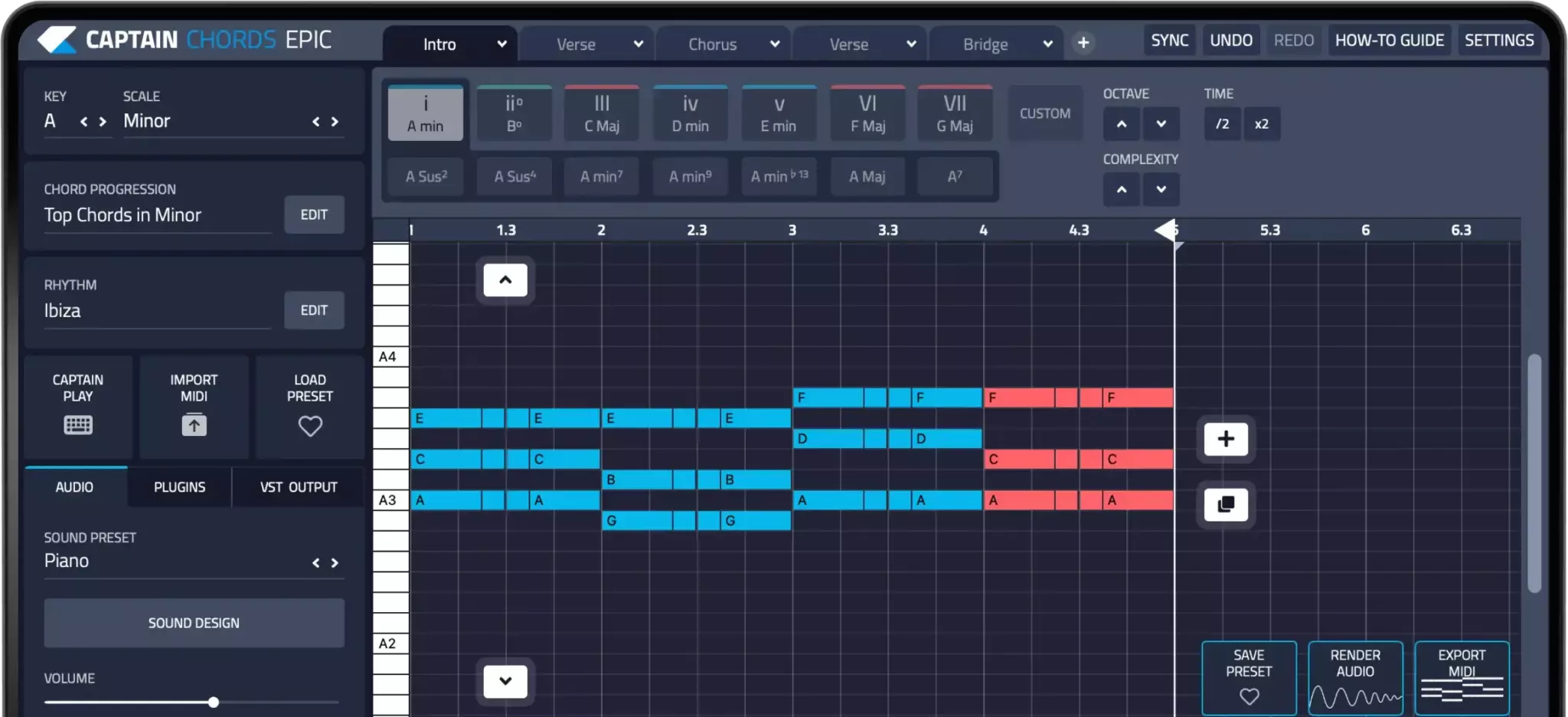
In this article
F major contains F, G, A, B♭, C, D and E. Its tonic chord is F–A–C. The seven diatonic triads are F, Gm, Am, B♭, C, Dm and E diminished.
Notice the one flat in the scale
Play the scale slowly and use B♭ rather than B natural. That note gives the sequence its major-scale interval pattern from F. Compare a phrase using B♭ with one using B natural over an F bass. Both can be musical, but the second introduces a different colour rather than simply repeating the basic major scale.
Build a clear four-chord phrase
Try F–Dm–B♭–C, with one bar per chord. The minor Dm chord adds contrast inside the major key. Do not assume every major-key song must sound cheerful or use only major chords. Melody, rhythm, tempo and performance all affect the character of the same harmonic sequence.
Record both versions and choose the pacing that leaves the melody enough room to finish its thought.
Use Gm–C–F to practise resolution
The ii–V–I progression is Gm–C–F. Add the seventh to C if you want C7: C–E–G–B♭. Listen for E moving up to F and B♭ moving down to A. These small motions explain why the return can feel strong even when the chords are played softly.
Choose voicings that fit the instrument
For F–Dm–B♭, keep F and A in the upper part while the other note moves from C to D to B♭. Let the bass state the roots separately. This is easier to hear on a plain keyboard sound. A pad may need more space between low notes because its sustained harmonics overlap.
Write a melody with a planned arrival
Start the phrase on A or C instead of always beginning on F. Use G as a passing note and aim for F at the end of the section. Sing the line without the chords to check that the rhythm is memorable. Then restore the harmony and listen for sustained notes that need a different placement.
Separate the key from a single chord
A track containing an F-major chord is not automatically in F major. That chord also appears in other keys. Look for the tonal centre across several phrases and listen to bass and melody endings. This distinction matters when arranging borrowed loops, where one chord label cannot describe the entire musical context.
Hear ii–V–I in F major
Both versions begin with Gm and arrive on F. The second uses C7, adding B-flat above the dominant chord.
A · Gm–C–F
Three triads show the ii–V–I movement. F repeats across the final two bars.
G–B♭–D | C–E–G | F–A–C, repeated.
Ready to play
Original synthesized lesson examples with a simple piano-like tone. These illustrate the musical idea; they are not recordings of Captain Plugins or finished genre productions.
Try this in your project
Create four bars of F–Dm–B♭–C. Add a melody that begins on A and ends on F. Make a second version ending the accompaniment with C7, then compare the sense of return while leaving the melody unchanged.
Quick reference
| Focus | What to try | What to listen for |
|---|---|---|
| Scale | F G A B♭ C D E | The single flat, B♭ |
| Four-chord loop | F–Dm–B♭–C | Major-key contrast |
| Cadence | Gm–C7–F | Small resolving movements |
Work with Captain Chords
Use Captain Chords to sketch the harmony, edit its voicing and rhythm, then develop the arrangement in your DAW.
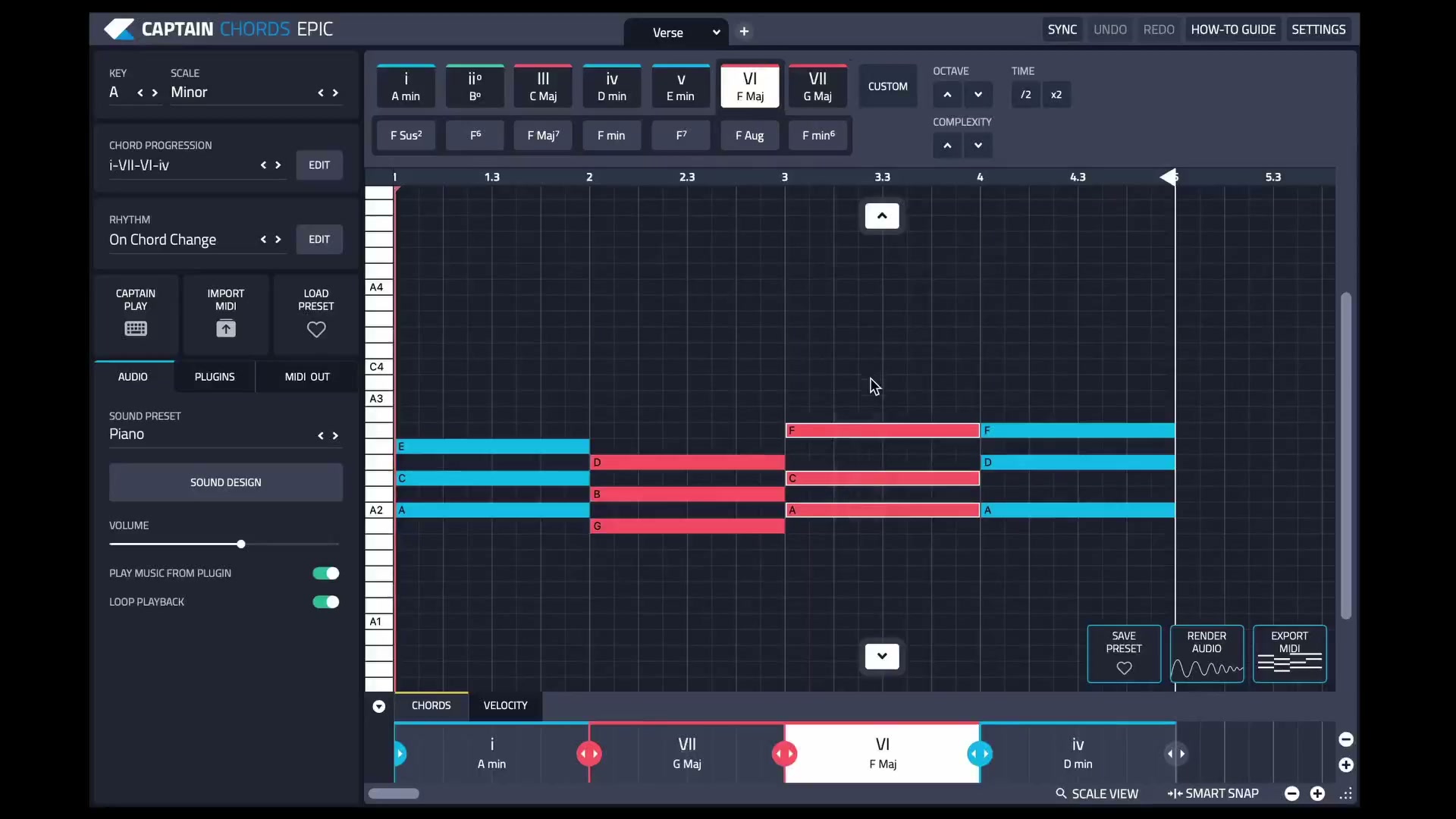
Captain Plugins 8 overview
See the update video for the current canvas and editing workflow.
Common questions
What is the relative minor of F major?
D minor. The keys share one flat but have different tonal centres.
Can I use B natural in F-major music?
Yes. It creates a colour outside the basic F-major scale. Use it deliberately and listen to its relationship with the chord underneath.