


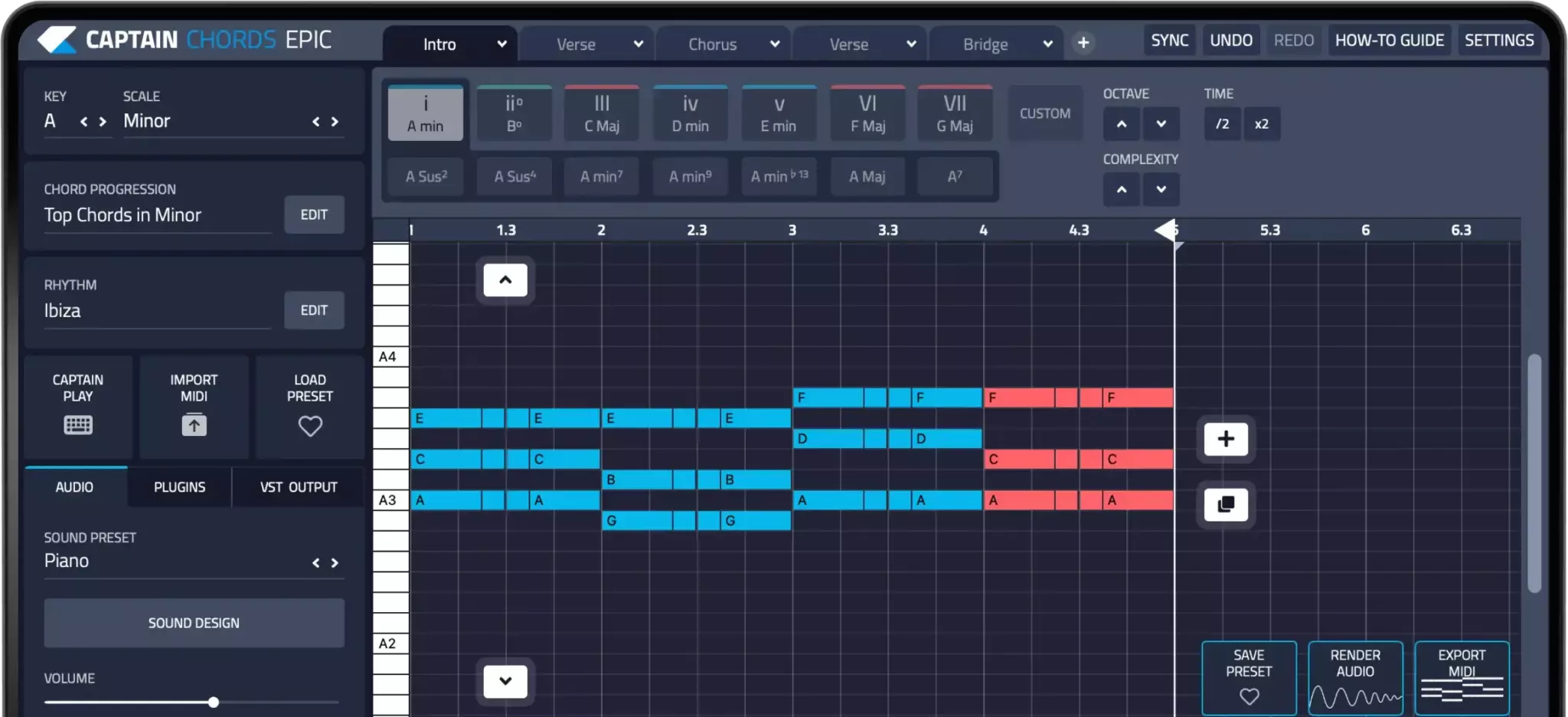
In this article
A major uses A, B, C♯, D, E, F♯ and G♯. Its tonic triad is A–C♯–E. The diatonic chords are A, Bm, C♯m, D, E, F♯m and G♯ diminished.
Start with the third of the chord
Play A–C♯–E, then compare A–C–E. The half-step difference between C♯ and C changes the chord from major to minor. Use a plain sound and keep the root and fifth fixed. This makes the interval difference easier to hear than comparing two unrelated presets or progressions.
Map the key before adding variations
A major has three sharps: F♯, C♯ and G♯. Enter the seven scale notes in a piano roll and label the tonic. If your software displays flats instead of sharps, remember that C♯ and D♭ can represent the same pitch in equal temperament, while the key spelling remains C♯.
Play the scale down as well as up, and pause on A after each pass. Then begin on another note and compare whether the same collection still feels centred in A.
Build a progression with contrast
Try A–E–F♯m–D, or I–V–vi–IV. The move to F♯m changes the chord quality while staying inside the key. Write the bass roots first, then place the triads above them. A clear bass line helps you judge the progression before deciding on richer seventh chords or additional layers.
Connect the chords through close notes
Above the bass, try A–C♯–E, G♯–B–E, A–C♯–F♯ and A–D–F♯. Most voices move a short distance. Compare this with jumping to every root-position triad. The close version often suits a supportive keyboard part, while larger jumps may be useful when the accompaniment itself is the hook.
Give E7 a purposeful ending
E7 contains E, G♯, B and D. Place it before A and hear how G♯ rises to A while D falls to C♯. Try the same return with a plain E-major chord and decide which supports the phrase. More notes are not automatically better; the seventh should serve the musical tension you want.
Write around the singer or lead
If the melody holds C♯, avoid crowding that register with a busy chord pattern. Move the accompaniment lower or higher, simplify the rhythm or leave a gap. The key is a shared framework for the parts, but it does not guarantee that every layer should play all of its notes at once.
Hear close voicings in A major
Both examples play A–E–F♯m–D with a separate root-note bass. Only the upper chord voicings change.
A · Root-position upper chords
The upper parts follow each chord into root position. Compare the size of each jump.
A–C♯–E | E–G♯–B | F♯–A–C♯ | D–F♯–A.
Ready to play
Original synthesized lesson examples with a simple piano-like tone. These illustrate the musical idea; they are not recordings of Captain Plugins or finished genre productions.
Try this in your project
Program A–E–F♯m–D for four bars. Use the close upper voicings above and a separate root-note bass. Write a two-bar melody using A, B, C♯ and E, then change its ending to lead into the start of the loop.
Quick reference
| Focus | What to try | What to listen for |
|---|---|---|
| Tonic chord | A–C♯–E | A clear major third |
| Progression | A–E–F♯m–D | Major and minor contrast |
| Cadence | E7–A | G♯ and D resolving inward |
Work with Captain Chords
Use Captain Chords to sketch the harmony, edit its voicing and rhythm, then develop the arrangement in your DAW.
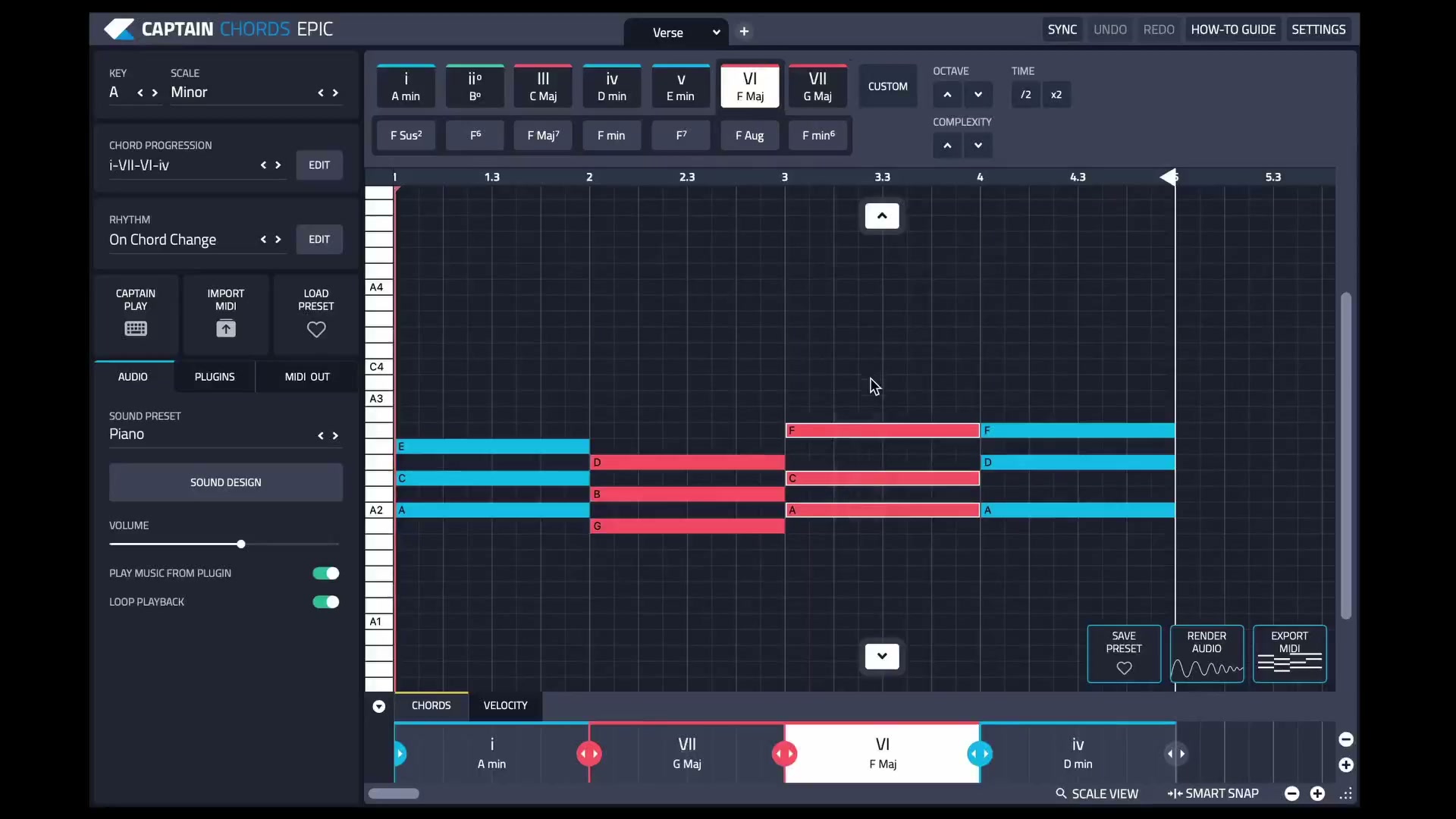
Captain Plugins 8 overview
See the update video for the current canvas and editing workflow.
Common questions
What is the relative minor of A major?
F♯ minor. Both use three sharps, but they establish different notes as home.
Is A major only useful for guitar music?
No. It is a key, not a genre or instrument setting. Choose a key that suits the melody, performers and register of the arrangement.