


In this article
B♭ major uses B♭, C, D, E♭, F, G and A. Its tonic triad is B♭–D–F. The diatonic chords are B♭, Cm, Dm, E♭, F, Gm and A diminished.
Find the tonic before building a progression
Play B♭–D–F and hold the chord long enough to hear its stability. Then play the seven scale notes upward and return to B♭. The scale contains two flats, B♭ and E♭. In a piano roll, a program may display B♭ as A♯, but B♭ is the useful spelling when describing this key.
Give each chord a job
Try B♭–Gm–E♭–F: I–vi–IV–V. The opening establishes home, Gm changes the colour, and F creates a route back to B♭. Keep one chord per bar for the first pass. Faster changes are available later, but a steady harmonic rhythm makes the relationships easier to hear and the melody easier to evaluate.
After the basic loop works, compare a slower two-bar chord change with the original one-bar rhythm.
Use the dominant seventh deliberately
F7 contains F, A, C and E♭. Compare F major with F7 before returning to B♭. The extra E♭ changes the tension, especially when it moves down to D in the next chord. This is useful at the end of a phrase, but it need not appear every time the F chord occurs.
Keep common tones in the upper voices
A progression can feel smoother when the right-hand notes stay close. Try B♭–D–F, B♭–D–G, B♭–E♭–G and A–C–F above the appropriate roots. Notice that the first three shapes retain B♭. Do not force every note to move just because the chord name changes.
Write a melody that identifies the key
Start with D–F–G–F over the tonic and answer with E♭–D–C–B♭. These are practice fragments, not a complete tune. Change their rhythm and choose where the phrase ends. B♭ major and G minor share the same collection, so a melody that repeatedly settles on G can shift the apparent tonal centre.
Arrange the registers around the main part
A low, close-position chord can crowd the bass. Move the chord voicing upward and let the bass play a single root, then listen again. If a vocal occupies the same register as the top chord note, simplify the accompaniment. The key gives you a note collection; spacing and timing decide how clearly the arrangement speaks.
Hear B-flat major with two dominant chords
The first three chords stay B♭–Gm–E♭. The last chord changes from F to F7. Play B♭ again in your DAW after each version to test the return.
A · B♭–Gm–E♭–F
Close voicings keep the upper notes near each other.
B♭–D–F | B♭–D–G | B♭–E♭–G | A–C–F.
Ready to play
Original synthesized lesson examples with a simple piano-like tone. These illustrate the musical idea; they are not recordings of Captain Plugins or finished genre productions.
Try this in your project
Write B♭–Gm–E♭–F over four bars. Make two upper-voice versions: all root position, then the close-moving shapes above. Add the same bass line and melody to each and compare the transition back to the first bar.
Quick reference
| Focus | What to try | What to listen for |
|---|---|---|
| Scale | B♭ C D E♭ F G A | B♭ as the resting note |
| Progression | B♭–Gm–E♭–F | I–vi–IV–V movement |
| Dominant seventh | F–A–C–E♭ | Tension resolving into B♭ major |
Work with Captain Chords
Use Captain Chords to sketch the harmony, edit its voicing and rhythm, then develop the arrangement in your DAW.
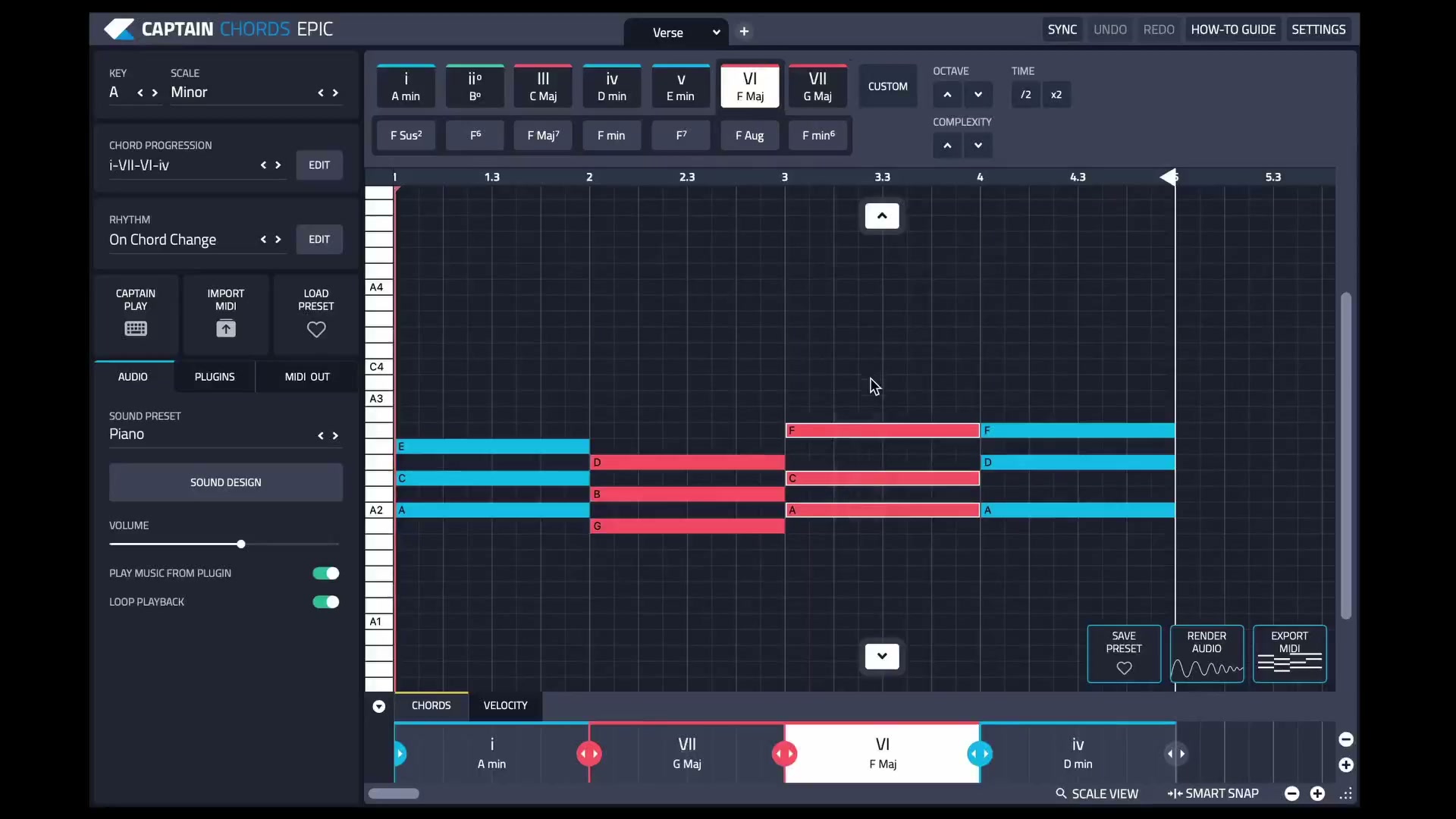
Captain Plugins 8 overview
See the update video for the current canvas and editing workflow.
Common questions
Is A♯ major the same key?
It is enharmonically equivalent in equal temperament, but B♭ major is much simpler to spell and read.
What is the relative minor of B♭ major?
G minor. Both use two flats, but they organize the music around different tonal centres.