


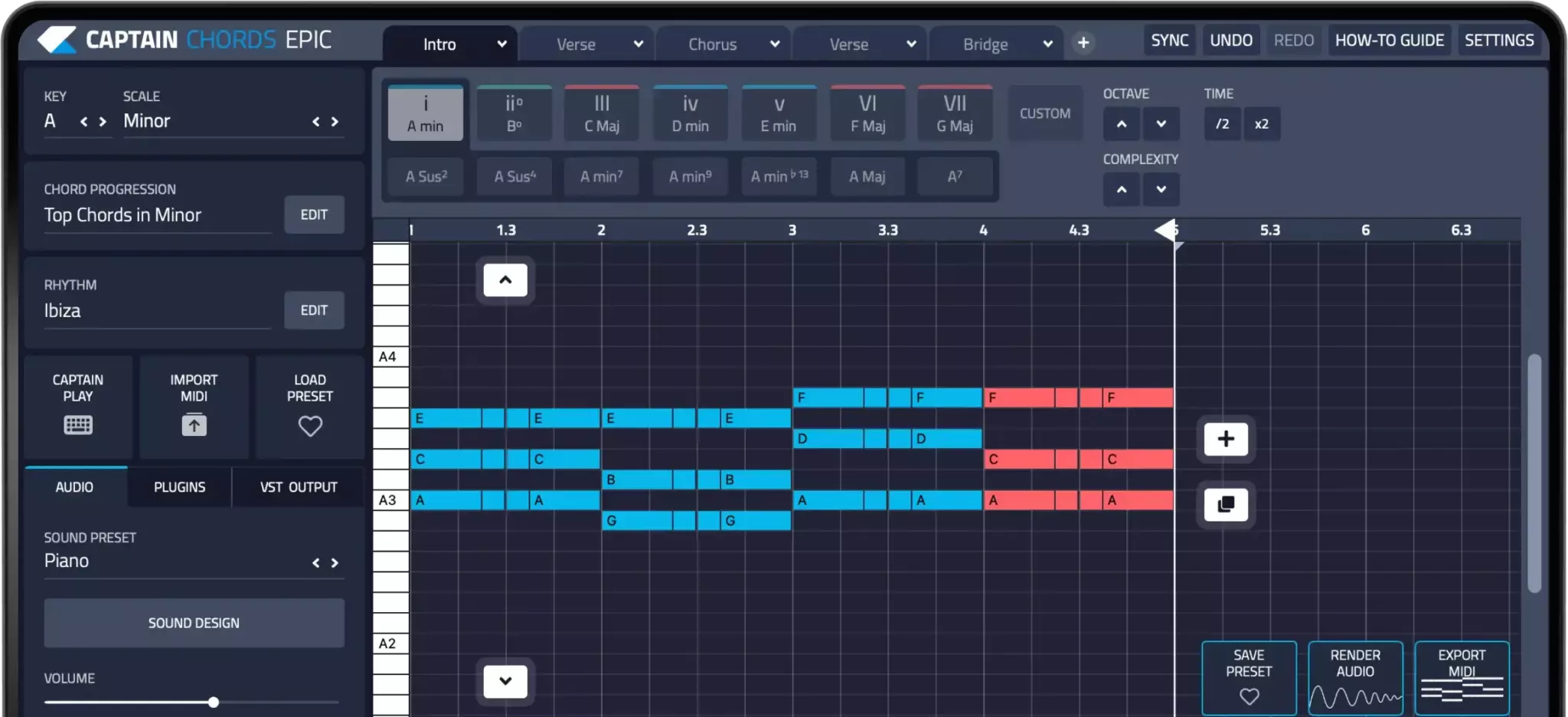
In this article
Useful pop starting points include I–V–vi–IV, I–vi–IV–V, I–IV–V, vi–IV–I–V and I–IV–vi–V. These are examples to write with, not a ranked statistical list. A progression becomes a song through melody, lyrics, rhythm and arrangement.
Hear the examples.
Choose an example, then press Play. Compare the notes as well as the sound.
C–G–Am–F
Compare this ordering with C–Am–F–G. The return to the first chord changes.
These are not Captain Plugins audio.Ready to play
Compare the order of the same chords
In C major, I–V–vi–IV is C–G–Am–F. Reorder those chords as C–Am–F–G and the end now moves through G back to C. The individual chords are familiar, but the phrase’s direction changes.
Try both under one short melody. Listen to the held notes at each chord change. If a note becomes uncomfortable, decide whether to change the chord, move the change in time, or alter that melodic note.
Use a minor opening without guessing the key
Am–F–C–G can be labelled vi–IV–I–V when C is the tonal centre. If A is established as home, it can be heard as i–VI–III–VII in A minor. The same four chords do not identify the centre by themselves.
Let the melody’s resting notes and the bass phrasing guide your description. For writing, the practical question is which note feels like the arrival and whether that matches the section you want.
Choose the key for the performance
Transpose the progression to fit the singer’s highest and lowest notes. C major is convenient on a keyboard, but it is not a universally better pop key. A low synth bass may also need a different octave after the shift.
Keep the melody and chords together while transposing. Moving only the accompaniment changes their relationship. Make a quick vocal or lead demo before committing to a final key.
Create contrast between sections
Keep the verse sparse: one chord per bar, fewer upper notes and a narrow melodic range. For the chorus, change the rhythm or the top-note shape before assuming you need completely new chords.
Use the final bar to lead into the next section. A held dominant, a pause or a different bass note can make the entrance clearer. Compare at the same playback level so a louder sound does not disguise a weaker phrase.
Keep the notes in view.
| Pattern in C major | Chords | Try listening for |
|---|---|---|
| I–V–vi–IV | C–G–Am–F | The return from F to C |
| I–vi–IV–V | C–Am–F–G | Dominant before the repeat |
| I–IV–V | C–F–G | A concise three-chord phrase |
| vi–IV–I–V | Am–F–C–G | Minor opening; centre depends on context |
| I–IV–vi–V | C–F–Am–G | Change in the middle of the phrase |
Try it in Captain Chords.
Compare C–G–Am–F and C–Am–F–G in Captain Chords. Keep your melody fixed for the first comparison, then change the rhythm and voicing to support the stronger version.
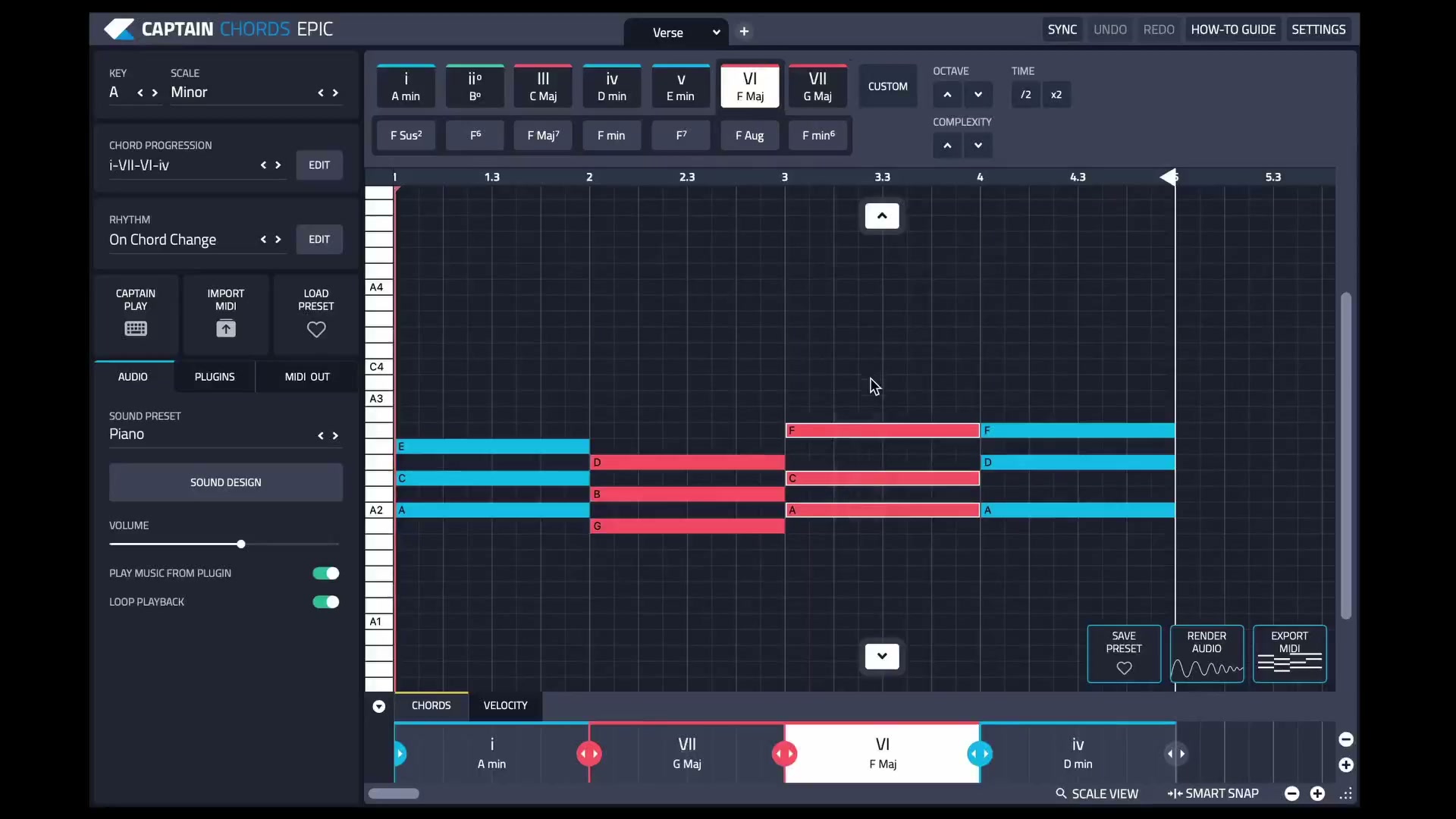
See the current editing workflow.
The Captain Plugins 8 update video shows the canvas and selection-based editing.
Common questions
Are these the five most common progressions by measured frequency?
This guide presents familiar writing patterns, not a current frequency study or a ranked dataset.
Will a common progression make my song sound copied?
The melody, words, rhythm, performance and arrangement matter greatly. Develop your own musical material rather than recreating a particular recording.
Can the verse and chorus use the same chords?
Yes. Change melodic shape, harmonic rhythm, register or instrumentation to give each section a different role.