


In this article
Start with a short melodic or rhythmic idea, choose a tonal centre, and write a few chords that support the important notes. Then test the timing, voicing and return to the first chord. There is no sequence that works best for every song.
Hear the examples.
Choose an example, then press Play. Compare the notes as well as the sound.
C–G–Am–F
Compare this ordering with C–Am–F–G. The return to the first chord changes.
These are not Captain Plugins audio.Ready to play
Choose one thing to preserve
Record the strongest part of your idea: a sung phrase, bass rhythm or chord stab. Keep it audible while you choose the harmony. This gives you a musical reason for selecting one chord over another.
If you have no starting idea, write a two-bar rhythm on one note. Repeat it with a small change, then choose pitches. A small constraint is often more useful than scrolling through every possible progression.
Make a clear first draft
Try C–G–Am–F, one chord per bar, with a simple instrument. Place a melody note from each chord on a strong beat, then connect the targets. Treat this as a first draft, not a finished formula.
A progression does not have to begin on I or even include a tonic chord in every loop. Unsettled harmony can be intentional. Listen for a clear musical relationship rather than rejecting a sequence because it fails a simplistic rule.
Test the end against the beginning
Loop the final bar into the first several times. If the join feels awkward, inspect the bass jump, the melody’s last note and any sustained notes crossing the boundary. Change one of those before replacing the whole sequence.
Try ending on G for a stronger pull toward C, or end on F for a different return. A rest can also clarify the repeat. The correct choice is the one that supports the phrase you want.
Write a second phrase with one deliberate change
Duplicate the first four bars. Change the final chord, alter the harmonic rhythm or move the top voice. Keeping most of the material makes the change audible and gives the listener something familiar to follow.
Compare the eight-bar phrase without effects, then with the intended sound. If the new section only works because it is much louder, check whether the melody or rhythm needs a clearer development. Keep the original version for a fair comparison.
Keep the notes in view.
| Stage | Question | Concrete action |
|---|---|---|
| Starting idea | What should stay recognisable? | Save the motif or rhythm |
| Harmony | Which chords support its strong notes? | Try a small diatonic set |
| Loop boundary | Does the last bar lead back? | Check bass, melody and tails |
| Second phrase | What changes on the repeat? | Edit one chord or rhythm |
| Arrangement | Is every layer needed? | Mute competing parts |
Try it in Captain Chords.
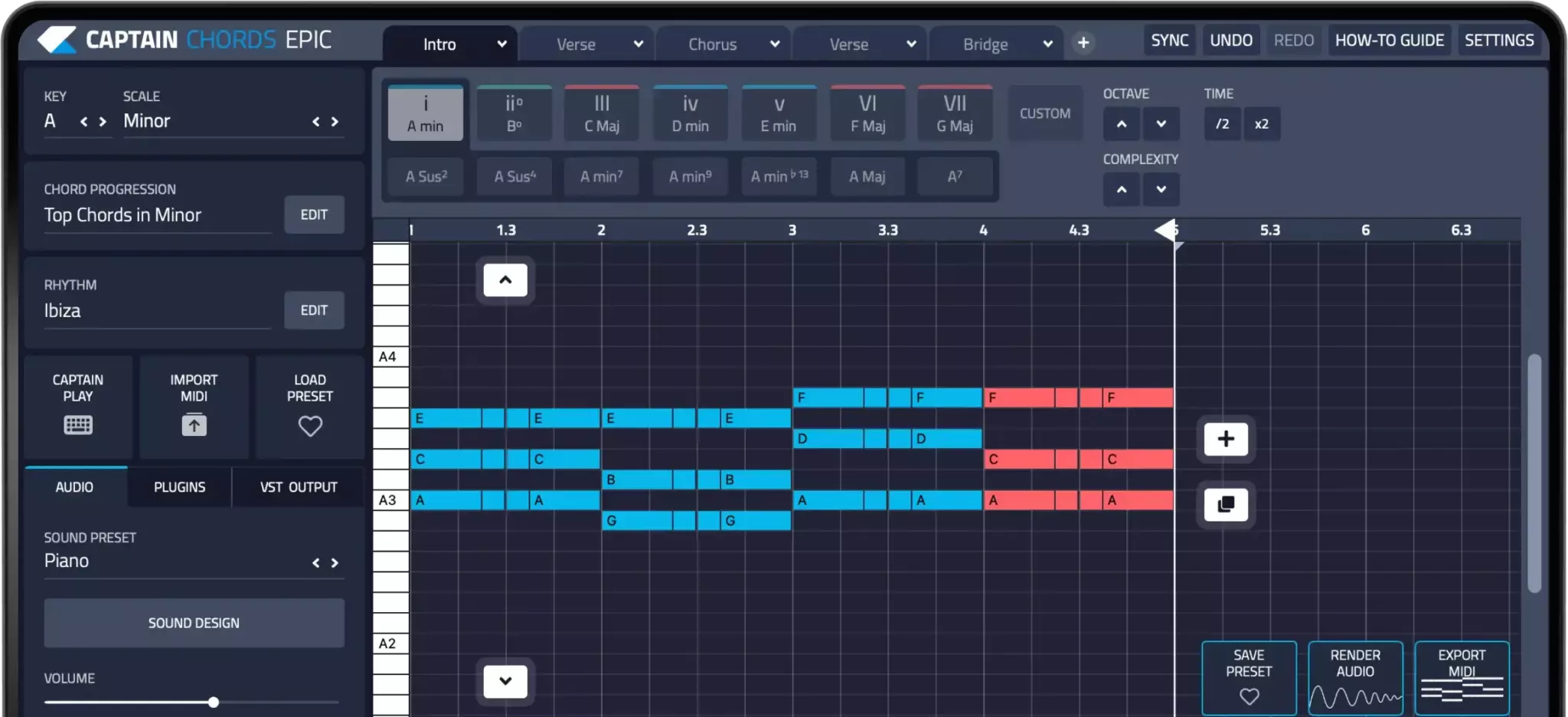
Create a four-bar sketch in Captain Chords, duplicate it and change only the ending. Compare both loops with your main idea before moving into the full DAW arrangement.
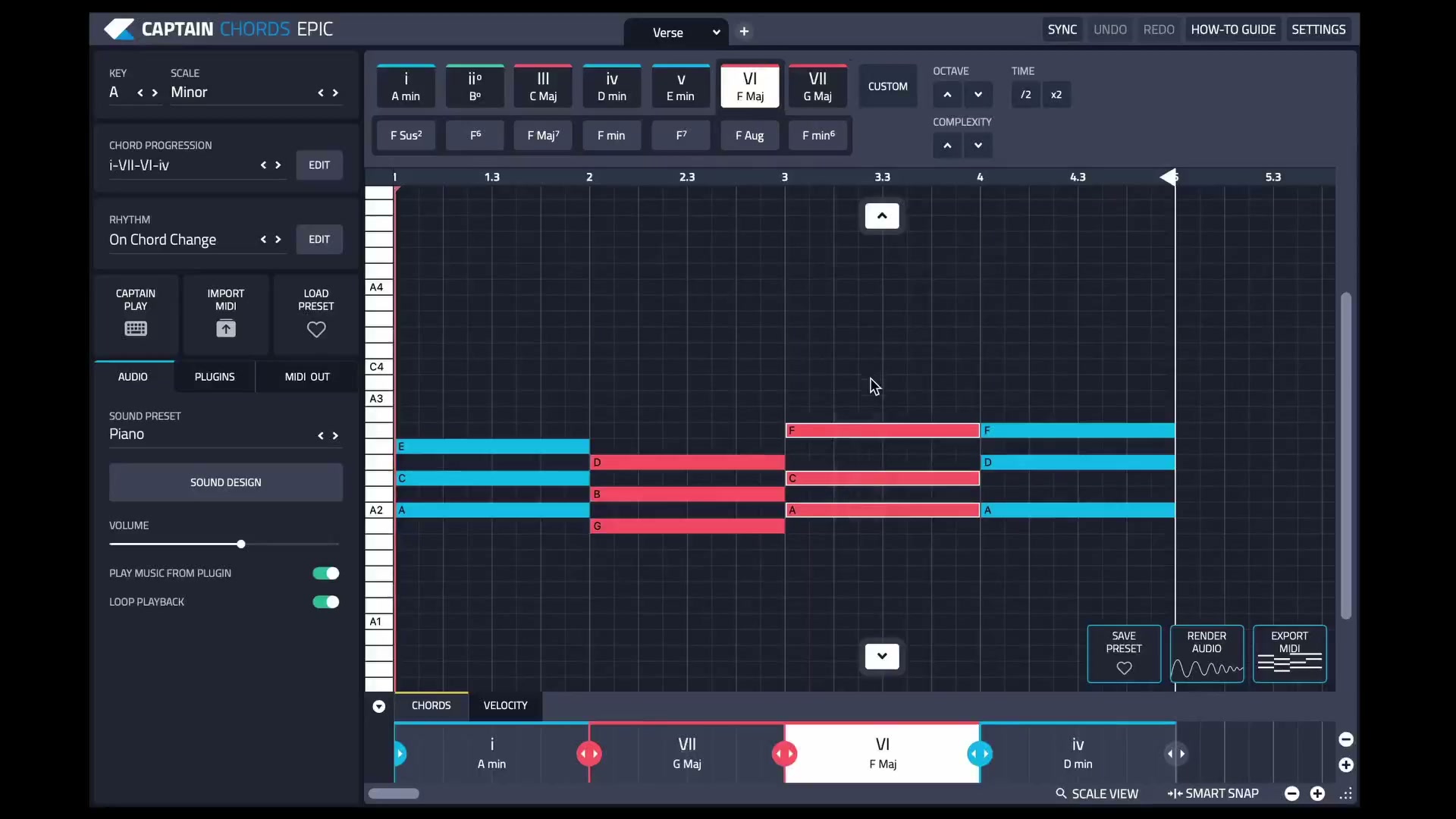
See the current editing workflow.
The Captain Plugins 8 update video shows the canvas and selection-based editing.
Common questions
Is a progression without I wrong?
No. Its centre can be implied by melody, bass and context, or ambiguity can be intentional.
Should I change every chord to make the chorus different?
Not necessarily. Rhythm, voicing, melody and arrangement can provide contrast with the same chord order.
Can software choose the final progression for me?
It can help you audition options, but the best choice depends on the vocal, arrangement and musical intention. Listen in context.