


In this article
A chord chart shows the harmony to play, usually as chord symbols placed above bars or lyrics. The symbol gives the root and chord quality; the chart’s layout gives timing context. It normally leaves you to choose the voicing, rhythm and instrument.
Hear the examples.
Choose an example, then press Play. Compare the notes as well as the sound.
C major
The major third is E. Keep C and G in place when comparing major with minor.
These are not Captain Plugins audio.Ready to play
Read the root before the suffix
In F♯m7, F♯ is the root, m means minor and 7 adds a minor seventh. Build the notes as F♯–A–C♯–E. A letter without a quality suffix, such as C, normally means a major triad. C+ means augmented, not simply C major.
Accidentals attached to the root apply to the whole chord name: B♭m is a minor chord rooted on B♭. Symbols vary between publishers, so read any chart legend. You may see maj7 written as Δ7, or minor written with a minus sign.
Separate symbols from performance instructions
C/E means a C major chord with E in the bass. It does not mean “C or E,” and the slash does not automatically add an extra chord. C/G places G below the C-major harmony. A slash bass can also be a note outside the basic triad.
A chord symbol rarely tells you the exact octave or every repeated note. A guitarist, pianist and synth player can play different voicings of the same chart. Start with simple triads, then choose a register and rhythm that leave room for the other parts.
Follow the bars and the harmonic rhythm
If a four-beat bar contains C for two beats and G for two beats, changing on every bar line will miss the intended rhythm. Look at the placement of the symbols, repeat signs and any written rhythmic cues. When the layout is ambiguous, use the recording or ask the writer.
Make a slow pass through the chart with one simple sound. Count the beats aloud or use the metronome. Only add strums, syncopation or arpeggios after you can follow the changes reliably.
Use a note chart as a reference, not a fixed voicing
The table below gives major and minor triads on twelve commonly written roots. Notes are spelled to show a root, third and fifth; on an equal-tempered keyboard, some notes have another name on the same key. G♯ minor, for example, uses G♯–B–D♯.
When you transpose, preserve the intervals and rewrite the note names for the new key. When you invert a chord, keep its notes but change their order. These are different operations: transposing C major to D major changes the notes, while inverting C major does not.
Keep the notes in view.
| Root | Major triad | Minor triad |
|---|---|---|
| C | C · E · G | C · E♭ · G |
| D♭ | D♭ · F · A♭ | D♭ · F♭ · A♭ |
| D | D · F♯ · A | D · F · A |
| E♭ | E♭ · G · B♭ | E♭ · G♭ · B♭ |
| E | E · G♯ · B | E · G · B |
| F | F · A · C | F · A♭ · C |
| F♯ | F♯ · A♯ · C♯ | F♯ · A · C♯ |
| G | G · B · D | G · B♭ · D |
| A♭ | A♭ · C · E♭ | A♭ · C♭ · E♭ |
| A | A · C♯ · E | A · C · E |
| B♭ | B♭ · D · F | B♭ · D♭ · F |
| B | B · D♯ · F♯ | B · D · F♯ |
Try it in Captain Chords.
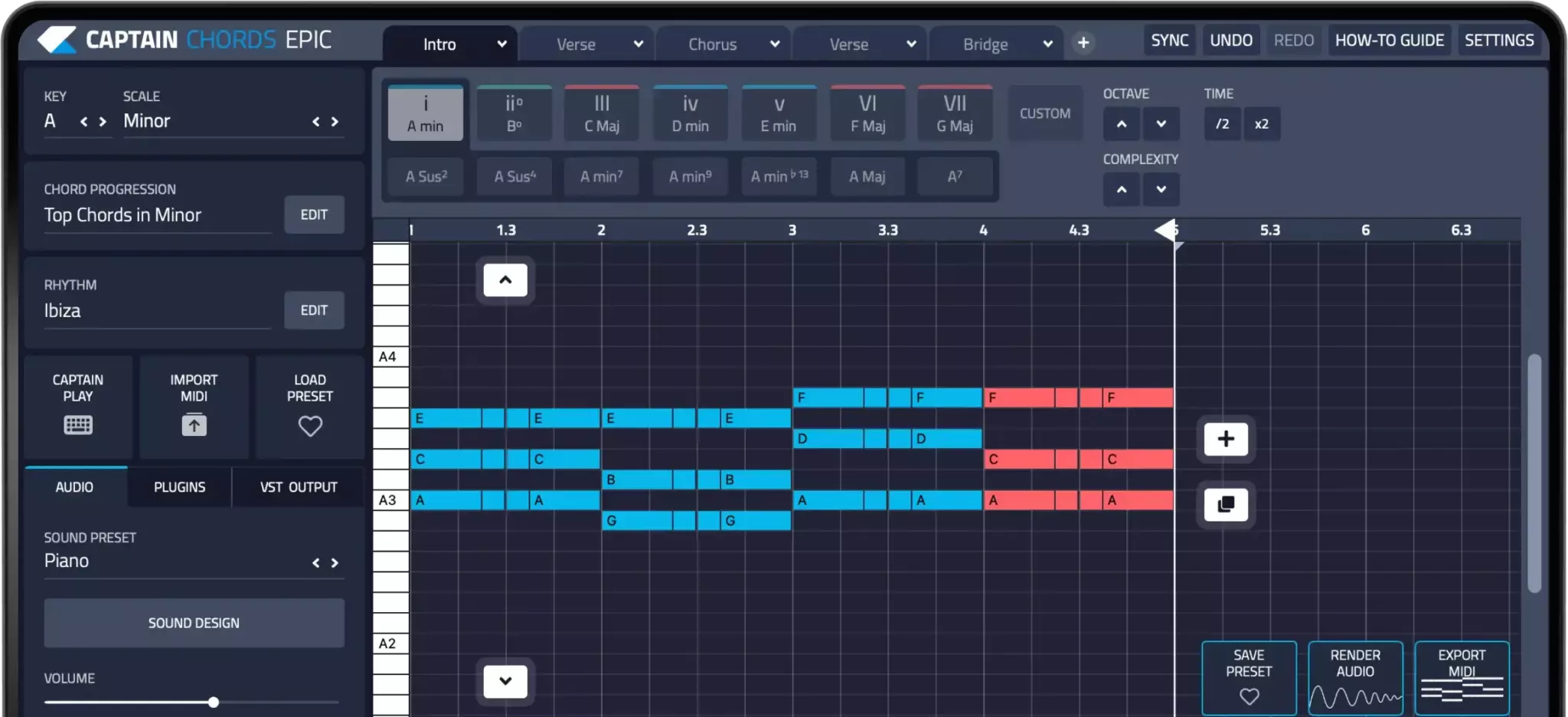
Use the chart to enter a short progression, then compare inversions while keeping the chord names unchanged. Use the current Captain Chords guide for the editing and export controls.
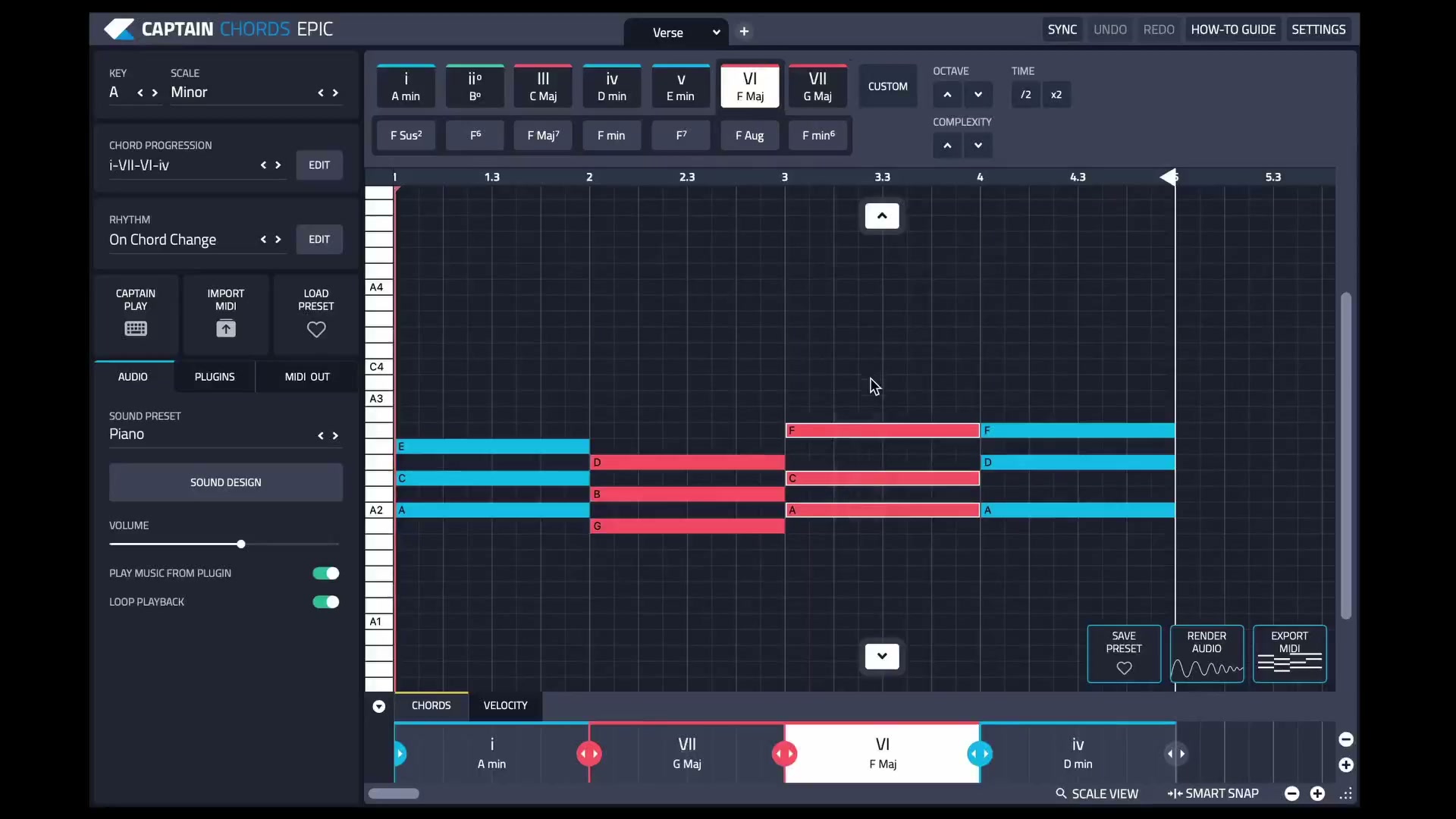
See the current editing workflow.
The Captain Plugins 8 update video shows the canvas and selection-based editing.
Common questions
What is the difference between C7 and Cmaj7?
C7 is C–E–G–B♭. Cmaj7 is C–E–G–B. The seventh is different, so the symbols are not interchangeable.
What does C+ mean?
It means C augmented: C–E–G♯. A plain C symbol normally means C major.
Why does the chart use F♭ or C♭?
These spellings preserve the root–third–fifth letter relationship. On an equal-tempered keyboard, F♭ is the same key as E, and C♭ is the same key as B.