


In this article
A suspended chord replaces the third of a triad with a second or fourth. Csus2 is C–D–G; Csus4 is C–F–G. With no third, these chords do not specify major or minor quality on their own.
Hear the examples.
Choose an example, then press Play. Compare the notes as well as the sound.
Csus2
D replaces the third. This is not the same as adding D while keeping E.
These are not Captain Plugins audio.Ready to play
Build sus2 and sus4 from the root
For sus2, use the root, major second and perfect fifth: 0, 2 and 7 semitones. For sus4, use the root, perfect fourth and perfect fifth: 0, 5 and 7. C–D–G and C–F–G are easy examples to compare on a keyboard.
To change C major into Csus4, move E up to F and keep C and G. To make Csus2, move E down to D. On a different root, count the intervals rather than moving to the next white key indiscriminately.
Resolve the suspended note when the phrase needs it
Try Csus4–C: F moves down to E while C and G stay still. You can hear the change clearly without adding a new root. Try Csus4–Cm next, with F moving to E♭, for a minor destination.
The word suspension comes from a more specific voice-leading practice in which a held note becomes a dissonance and resolves. A modern sus chord symbol identifies a sonority; it does not require you to write that historical preparation and resolution every time.
Keep it open when that suits the part
A sus chord can remain as a pad, riff or repeated harmony without resolving immediately. Try holding Csus2 while the bass changes, and listen to how the combination is reinterpreted. Keep the first version sparse so the effect stays easy to hear.
The vocal or another instrument may supply a third even if the chord part leaves it out. Check the arrangement before calling the entire passage neither major nor minor. An open chord part can still belong to a clearly major or minor song.
Do not confuse sus2 with add9
Cadd9 keeps the third: C–E–G–D. Csus2 leaves E out: C–D–G. The ninth is the second an octave higher, but the presence of the third is the important distinction in these symbols.
C7sus4 adds a minor seventh to Csus4: C–F–G–B♭. Start with the plain sus chord before adding the seventh. If a close D–E or E–F pair feels crowded, try changing registers or note lengths rather than assuming the notes must never appear together.
Keep the notes in view.
| Symbol | Notes | Third present? |
|---|---|---|
| Csus2 | C · D · G | No |
| Csus4 | C · F · G | No |
| Cadd9 | C · E · G · D | Yes: E |
| C7sus4 | C · F · G · B♭ | No |
| C | C · E · G | Yes: E |
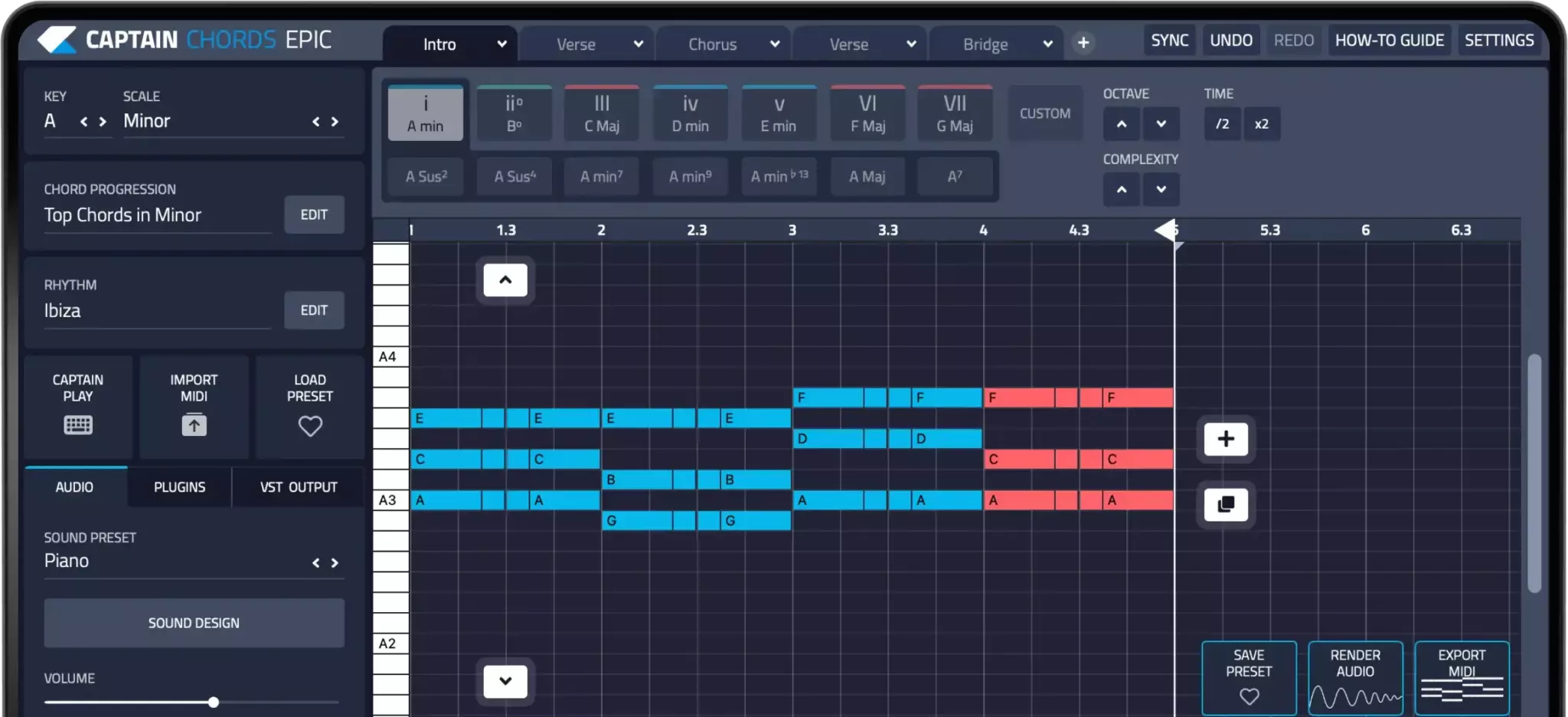
Try it in Captain Chords.
Take C–Am–F–G and change the last chord to Gsus4 before returning to G. Listen to the timing of C resolving to B inside that final chord.
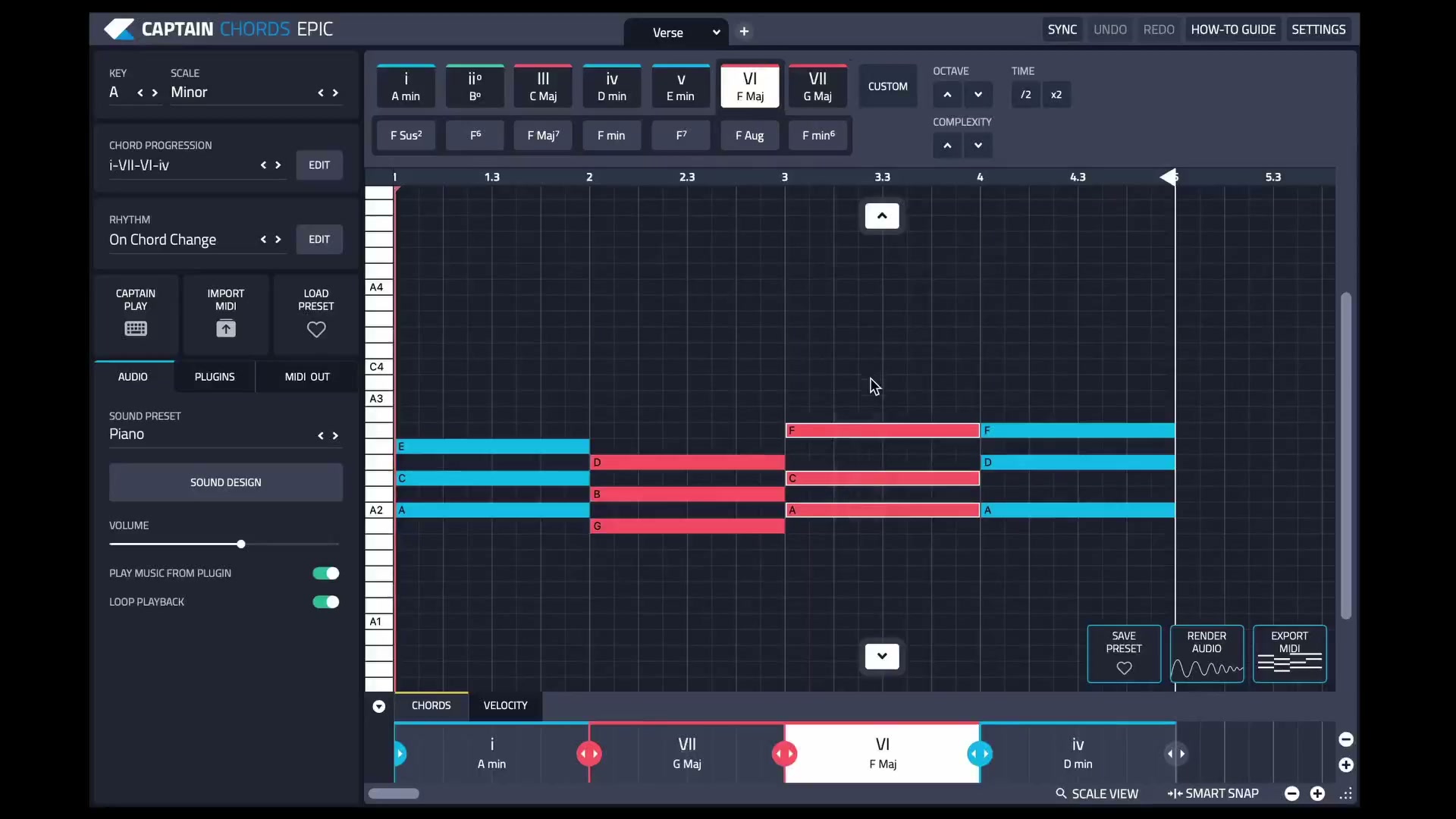
See the current editing workflow.
The Captain Plugins 8 update video shows the canvas and selection-based editing.
Common questions
Is a suspended chord major or minor?
The chord itself has no third, so its basic symbol does not specify either. Other instruments and the surrounding key can establish the wider harmonic context.
Does a sus4 chord always have to resolve?
No. Resolution to a third is a useful option, but modern sus chords can also be held or repeated as independent sounds.
What does sus mean without a number?
It commonly means sus4, but check the chart’s notation conventions or the intended voicing if there is any ambiguity.
Lesson and examples updated by Mixed In Key.