


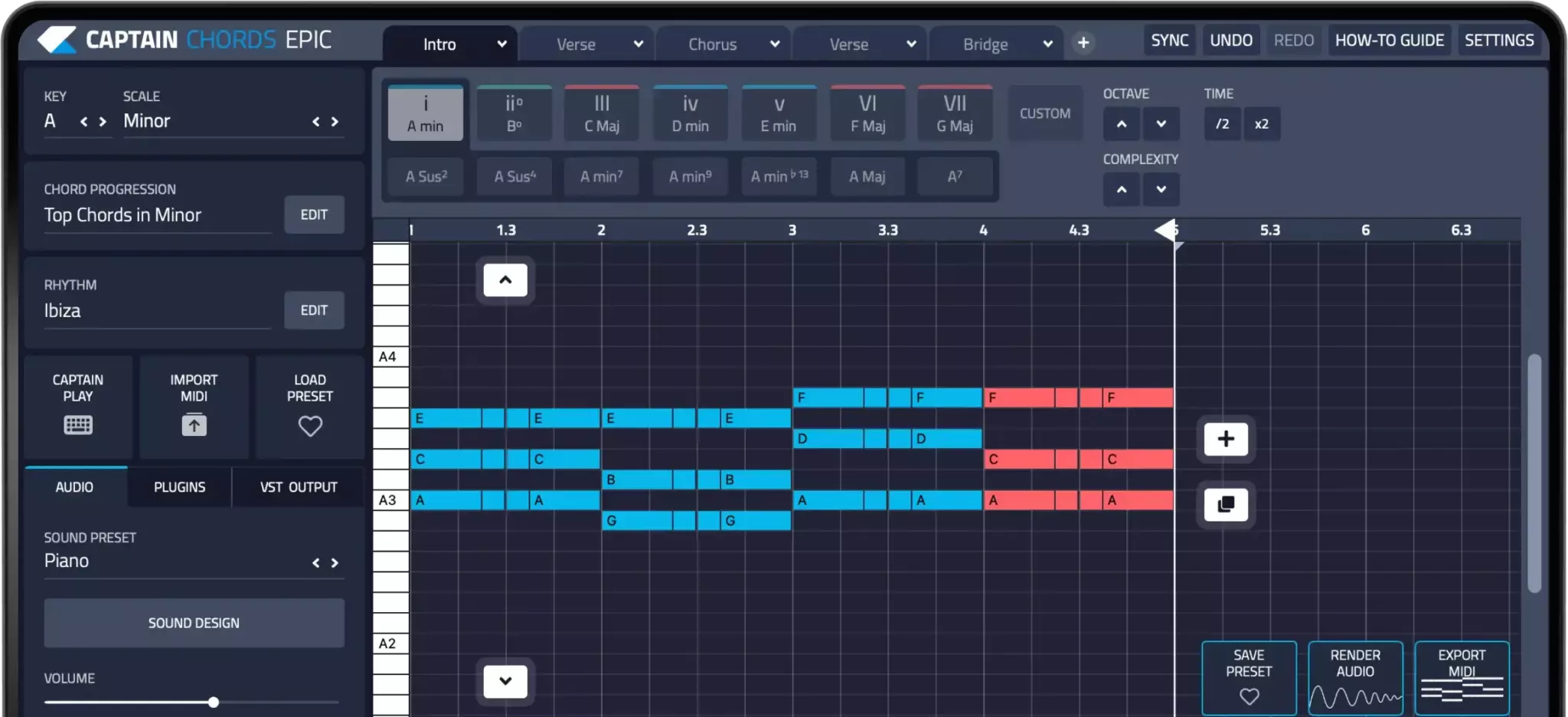
In this article
A chord progression is a sequence of harmonies over time. C–G–Am–F names the chords; I–V–vi–IV describes their relationship in C major. The note lengths, voicings, bass and melody shape how the sequence actually sounds.
Hear the examples.
Choose an example, then press Play. Compare the notes as well as the sound.
C–G–Am–F
Compare this ordering with C–Am–F–G. The return to the first chord changes.
These are not Captain Plugins audio.Ready to play
Read the chord names
A plain C means C major: C–E–G. Am means A minor: A–C–E. The root is the letter name, while a suffix tells you the quality or added notes. Cmaj7 and C7 differ by their seventh, so do not treat all extra symbols as interchangeable.
Play the four basic triads slowly before arranging them. If you are using a piano roll, inspect every note. A wrong third can change a chord from major to minor even when the bass root is correct.
Use numerals to describe relationships
In C major, the triads are I C, ii Dm, iii Em, IV F, V G, vi Am and vii° Bdim. Uppercase normally marks major, lowercase minor, and the small circle diminished. The numeral describes the chord root’s scale degree.
I–V–vi–IV becomes G–D–Em–C in G major. The roots change, while the relative pattern remains. State the key alongside the numerals so a collaborator can turn them into actual notes.
Give the chords a rhythm
Place C, G, Am and F over four bars, one chord per bar. Next let C last two bars and split the final two bars between the remaining chords. You have kept the order but changed the harmonic rhythm.
Listen across the loop boundary from F back to C. That join is part of the progression too. Try a rest before the repeat or hold a common note over the change to make the phrase more deliberate.
Add a melody and review the bass
Begin with E over C, D over G, C over Am and C over F. Use those as target notes, then connect them with a small rhythmic idea. You do not need to follow each root in the melody.
The bass can begin with the roots. Later, an inversion or passing bass note can add movement. Keep the first version so you can compare whether each edit improves the track. Some music uses one harmony or a drone; a four-chord loop is a useful exercise, not a requirement.
Keep the notes in view.
| Numeral in C major | Chord | Notes |
|---|---|---|
| I | C | C · E · G |
| ii | Dm | D · F · A |
| iii | Em | E · G · B |
| IV | F | F · A · C |
| V | G | G · B · D |
| vi | Am | A · C · E |
| vii° | Bdim | B · D · F |
Try it in Captain Chords.
Start with C–G–Am–F in Captain Chords. Compare two rhythms and two sets of inversions, then export the version that supports your melody.
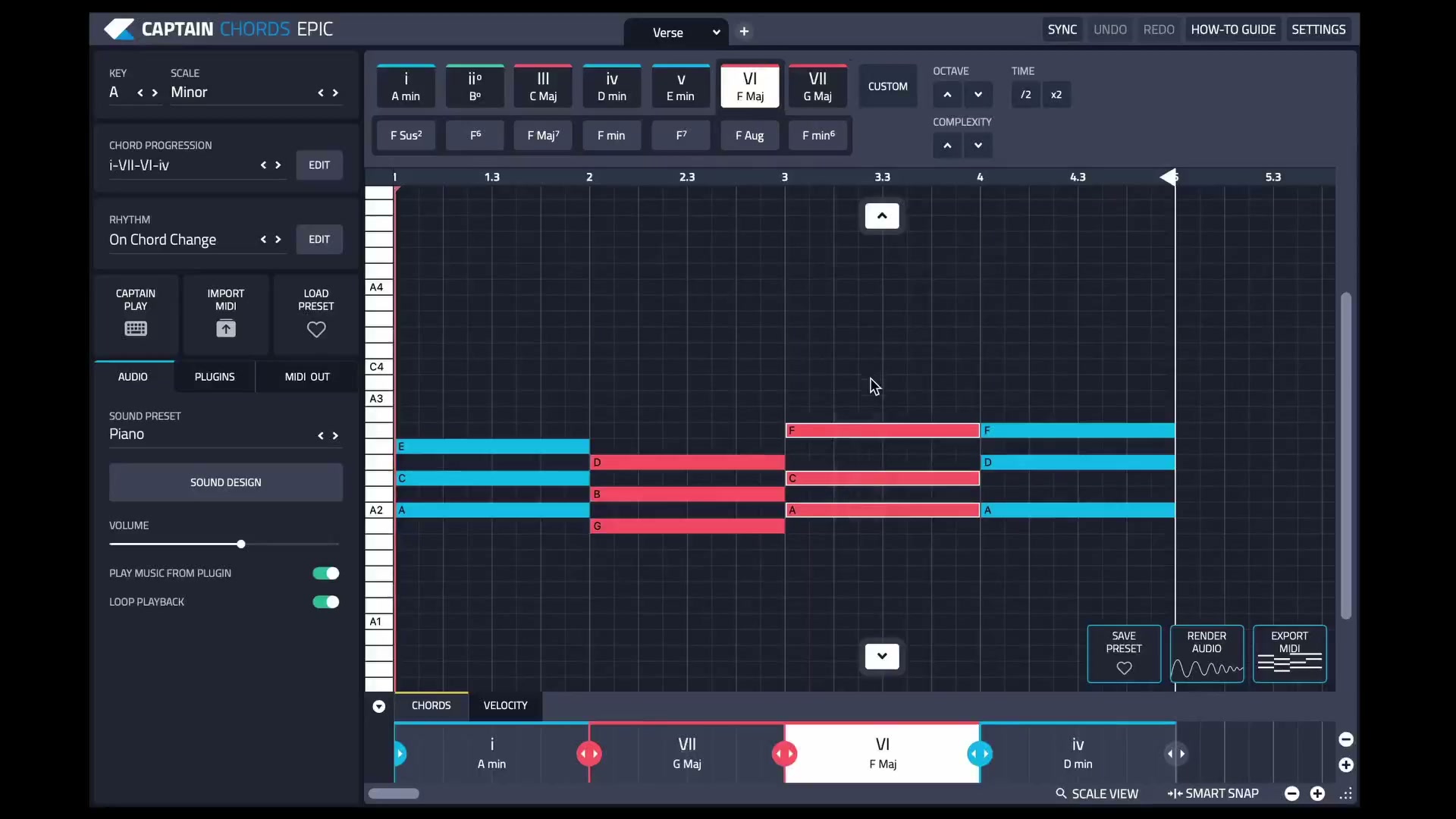
See the current editing workflow.
The Captain Plugins 8 update video shows the canvas and selection-based editing.
Common questions
Must a progression begin on I?
No. Beginning on another chord can work. The broader phrase, bass and melody help establish the key.
Are four chords enough for a song?
Yes. Repetition, rhythm, melody and arrangement can develop a small harmonic idea into a complete song.
Can I use chords outside the key?
Yes. Borrowed chords, secondary dominants and chromatic movement are common options. Learn the basic collection first so the departure is deliberate.