


In this article
A chord type describes the intervals between its notes. A major triad has a root, major third and perfect fifth; a minor triad lowers that third by one semitone. Changing the fifth gives you diminished or augmented triads.
Hear the examples.
Choose an example, then press Play. Compare the notes as well as the sound.
C major
The major third is E. Keep C and G in place when comparing major with minor.
These are not Captain Plugins audio.Ready to play
Start with intervals, not keyboard shapes
A semitone is the distance to the next piano key, including black keys. Count from the root, treating that starting note as zero. C major is C–E–G: E is four semitones above C and G is seven. Move the same spacing to D and you get D–F♯–A. Simply skipping white keys does not produce a major chord from every root.
A triad contains three different note names. Playing C–E–G–C adds an octave doubling, not a new chord type. The extra C can change the weight of the sound while the harmony stays C major.
Major and minor: listen to the third
Compare C major with C minor while keeping the same instrument, register and volume. Only E changes to E♭. That third defines the difference; changing tempo or choosing a darker synth does not turn a major chord into a minor chord.
Major and minor are often described as happy and sad, but those labels are only a starting point. The melody, rhythm, arrangement and surrounding chords all affect the mood. Use the interval pattern to identify the chord, then use your ears to judge its role.
Diminished and augmented: change the fifth
A diminished triad has a minor third and diminished fifth: C–E♭–G♭. An augmented triad has a major third and augmented fifth: C–E–G♯. Both sound less settled than a plain major or minor triad, but neither needs to appear in every progression.
Try C–Caug–F. The G in C can rise to G♯ in Caug and then A in F. This small movement gives the unusual chord a clear reason to be there. With diminished chords, try B–D–F leading into C–E–G.
Sevenths, suspended chords and added notes
A seventh chord adds a fourth chord tone. Cmaj7 contains B, while C7 contains B♭: those names are not interchangeable. A suspended chord replaces the third with a second or fourth. Csus2 is C–D–G; Csus4 is C–F–G.
An added-note chord keeps the third. Cadd9 contains C–E–G–D, so it is different from Csus2. Inversions do something else again: they change which chord tone is lowest. E–G–C is still C major, now in first inversion.
Keep the notes in view.
| Type | Semitones from root | C example |
|---|---|---|
| Major | 0 · 4 · 7 | C · E · G |
| Minor | 0 · 3 · 7 | C · E♭ · G |
| Diminished | 0 · 3 · 6 | C · E♭ · G♭ |
| Augmented | 0 · 4 · 8 | C · E · G♯ |
| Major seventh | 0 · 4 · 7 · 11 | C · E · G · B |
| Dominant seventh | 0 · 4 · 7 · 10 | C · E · G · B♭ |
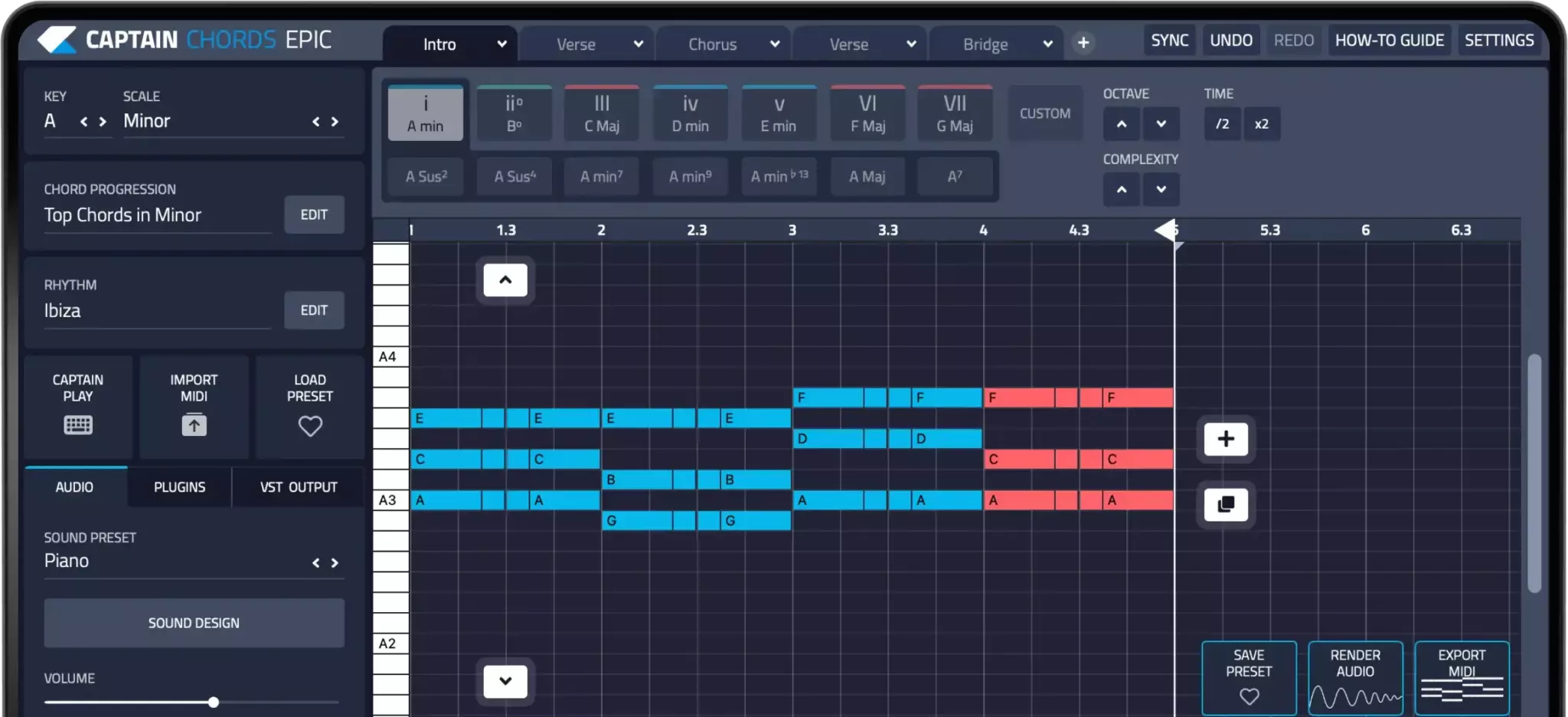
Try it in Captain Chords.
Build C–Am–F–G first. Keep a copy, then replace one chord with a seventh or suspended version. Listen with the melody before deciding which version to keep.
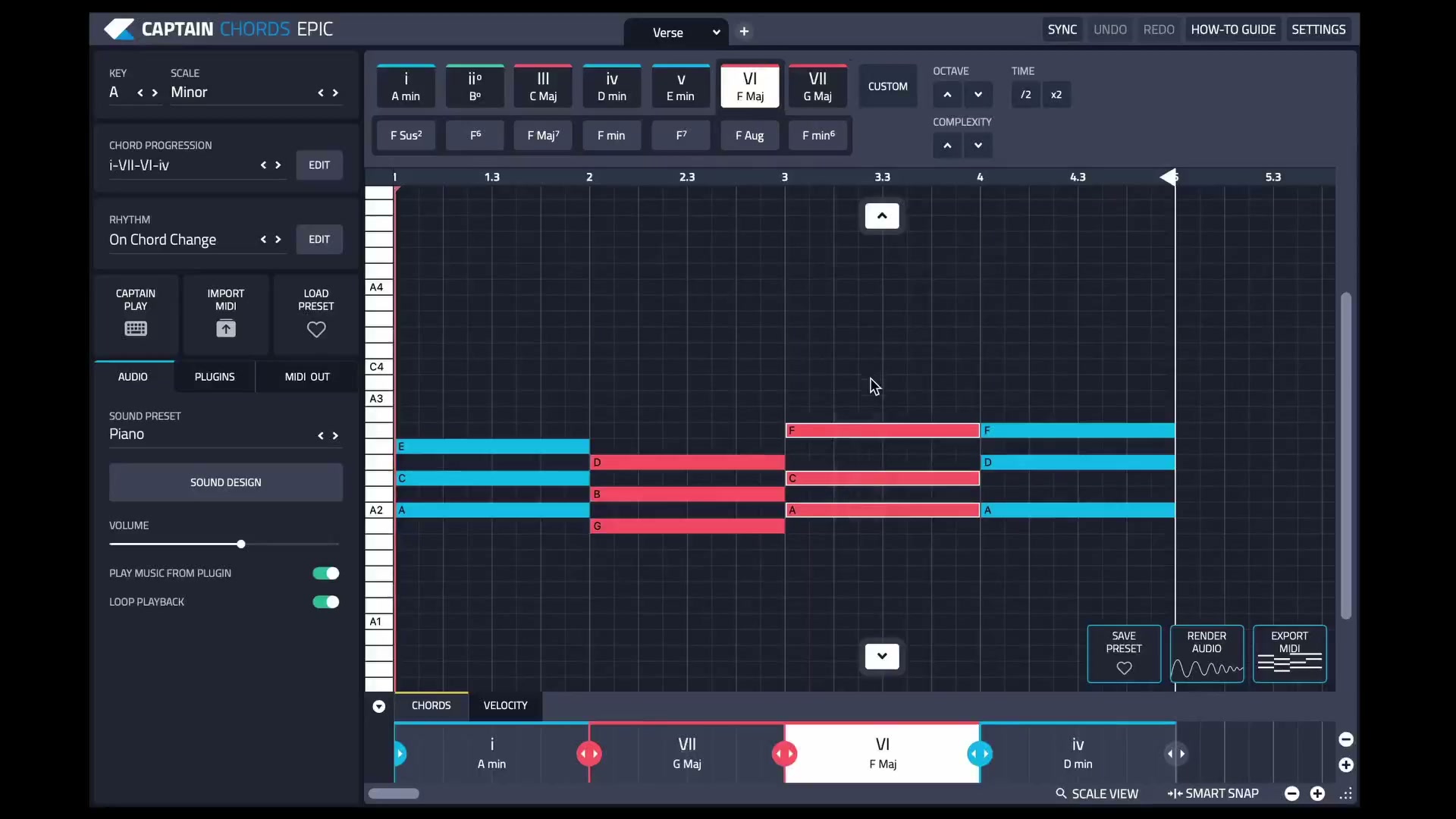
See the current editing workflow.
The Captain Plugins 8 update video shows the canvas and selection-based editing.
Common questions
How many types of chords are there?
There are four basic triad qualities: major, minor, diminished and augmented. Sevenths, extensions, suspended chords and added-note chords give you many more possibilities.
Is an inversion a different chord?
An inversion changes the lowest note, not the set of chord tones. C–E–G and E–G–C are both C major.
Does a major key use only major chords?
No. C major includes the minor chords Dm, Em and Am, as well as B diminished. The key and the quality of an individual chord describe different things.
Lesson and examples updated by Mixed In Key.