


The Art of DJing: When to Mix Fast, When to Mix Slow
Updated
Choose the length of a transition to suit the music and the moment. A quick cut can create contrast; a longer blend can keep the groove moving. Neither approach is automatically better, and the crowd should still have room to hear the tracks.

What do fast and slow mixing mean?
Here, fast and slow refer to the length of the transition and how quickly you move through tracks, not the BPM. A fast mix may be a short cut or cue routine. A slow mix may overlap two tracks for several phrases.
The arrangement matters. A sparse intro gives you different options from a track whose vocal starts immediately.
Read the crowd and the slot
Consider whether you are opening, supporting or playing the main set. Watch how the room responds before increasing the pace of track changes. A warm-up or long bar set may benefit from more space; a short performance slot may offer room for a practiced routine.
Keep checking the response. A technique that draws attention once can become tiring when repeated throughout the set.
Use a quick transition when it serves the track
A short transition can avoid overlapping two busy vocals, move between contrasting arrangements or introduce a recognizable phrase at the right moment. Rehearse the start and exit so it sounds intentional.
If the keys clash, consider a percussion-only overlap, a shorter blend or a cut at a phrase boundary. Do not assume every out-of-key transition has to be as fast as possible; listen to the actual parts.
Use a longer blend when the parts fit
A longer overlap can work well when rhythms align and the musical parts leave room for each other. Compare the basslines, chords, vocals and phrase lengths, and rehearse with your performance tempo and key-lock settings.
Exchange the low frequencies deliberately and remove the outgoing track before its next phrase creates a conflict. If the blend drifts or becomes crowded, use the exit you practiced.
Prepare alternatives with key and energy

Mixed In Key 11 Standard and Pro analyze key, BPM, Energy Level and automatic Cue Points. Use those results to organize options for a smooth continuation, a change in intensity or a short routine.
An energy rating compares tracks; it does not control the audience response. Keep listening to the section you will actually play. Pro’s deck players and stem playback can help you audition melodic combinations during preparation.
Balance routines with time for the music
Place a practiced fast routine where it adds contrast, then let a strong track play. Record a rehearsal and listen for whether the set feels rushed, static or balanced.
Plan a possible opening and ending, but leave room to change direction. A useful playlist includes alternatives for the same moment, not only one fixed route.
Before you play
- Know the incoming start and outgoing exit phrase.
- Check vocals and basslines in the overlap.
- Rehearse both a longer blend and a short alternative.
- Review cue positions and the beat grid.
- Listen back to the complete sequence.
Prepare your music with Mixed In Key 11
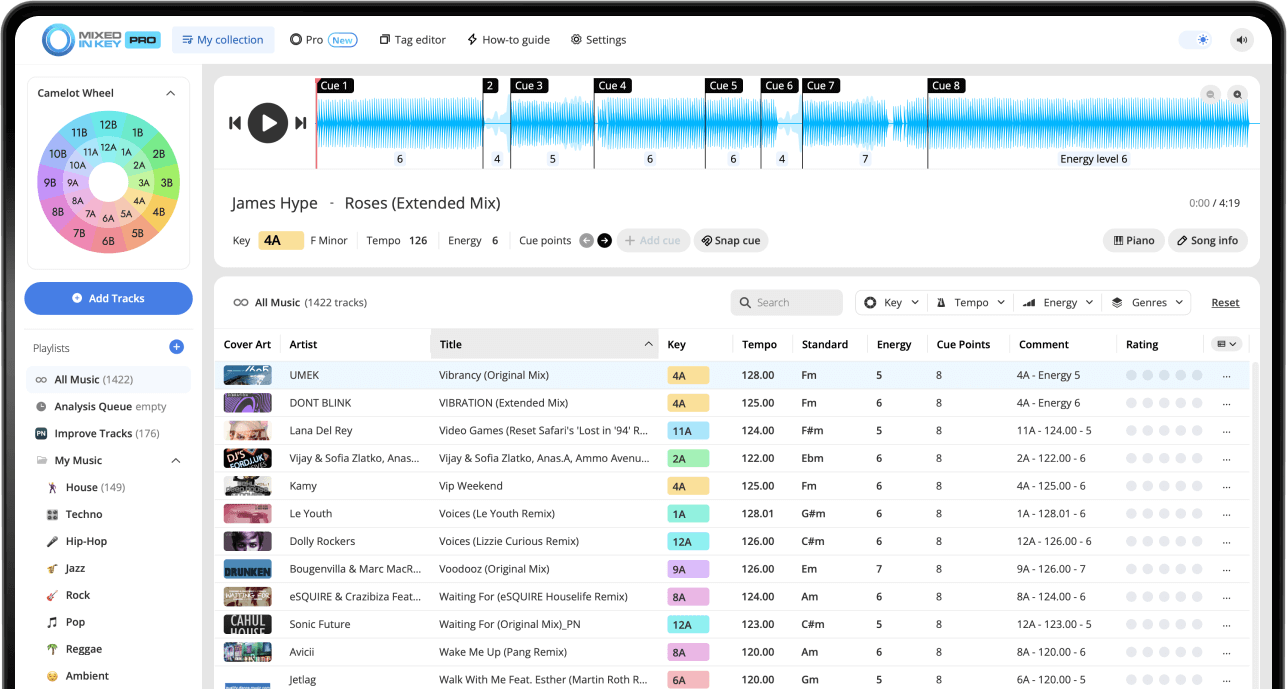
Mixed In Key 11 Standard and Pro analyze musical key, BPM, Energy Level and automatic Cue Points. Use those results to organize your collection and prepare transitions. Review cues against the beat grid, then follow the integration guide for your DJ software.
Pro adds mashup suggestions, deck players, stem playback and key changes so you can audition combinations before finishing them in your DAW.
Put it into practice
Original article by Adam Hignell.