


In this article
EDM covers many styles, so there is no universal best chord progression. Am–F–C–G, C–G–Am–F and Am–Dm–E7–Am are useful studies. Choose the one that supports your lead, bass register and arrangement, then develop the rhythm and sound.
Hear the examples.
Choose an example, then press Play. Compare the notes as well as the sound.
Am–F–C–G
A minor-centred four-chord starting point. The melody and phrasing help establish the key.
These are not Captain Plugins audio.Ready to play
Choose the harmonic role
A melodic breakdown may feature sustained chords, while a drop may use short stabs or imply the same harmony through bass and lead. Begin by deciding where the part belongs. You do not need full block chords in every section.
Use a plain sound to compare the notes, then audition the intended synth. A large unison patch can make a simple triad feel dense. Remove doubled notes before assuming you need a more complex progression.
Read the numerals accurately
In A minor, Am–F–C–G is i–VI–III–VII using natural-minor scale-degree notation. In C major, C–G–Am–F is I–V–vi–IV. Uppercase marks a major chord quality and lowercase minor; it does not assign an emotion to the track.
Some systems label minor-key chords relative to the parallel major scale, using ♭VI, ♭III and ♭VII. State the convention and the actual chord names when sharing a progression so collaborators do not have to guess.
Choose between a loop and a strong return
Am–F–C–G can keep moving across its repeat. Am–Dm–E7–Am has a more directed return because G♯ in E7 leads toward A. Compare both with the same rhythm and top melody.
A strong cadence is not mandatory for a dance loop. A progression can maintain tension for many bars. Use a more settled ending when the arrangement needs an arrival, rather than closing every short phrase automatically.
Design the rhythm and register
Shorten the chord notes against a four-on-the-floor kick, or let a pad sustain during a breakdown. Check release tails after every change. Sidechain processing can shape the envelope, but the underlying note lengths still matter.
Keep the sub bass separate from dense upper chords. After transposing, inspect the bass register and the lead’s high notes. Build contrast with rhythm, octaves and selective layers before adding more harmonies.
Keep the notes in view.
| Progression | Actual chords | Writing focus |
|---|---|---|
| i–VI–III–VII in A minor | Am–F–C–G | A repeating minor-centred study |
| I–V–vi–IV in C major | C–G–Am–F | Major-key pattern |
| i–iv–V7–i in A minor | Am–Dm–E7–Am | G♯ leads back to A |
| One-chord pattern | Am or Am7 | Rhythm and sound carry the motion |
Try it in Captain Chords.
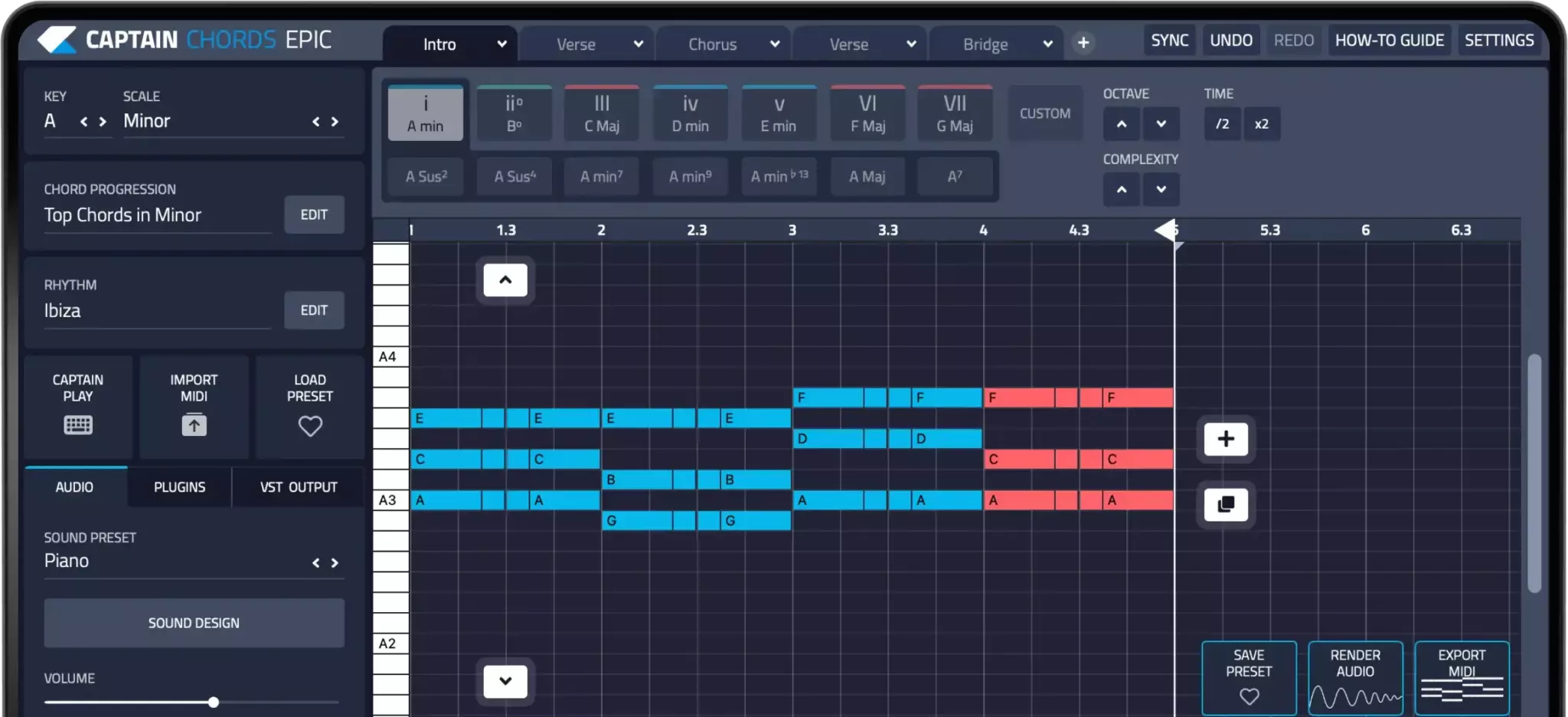
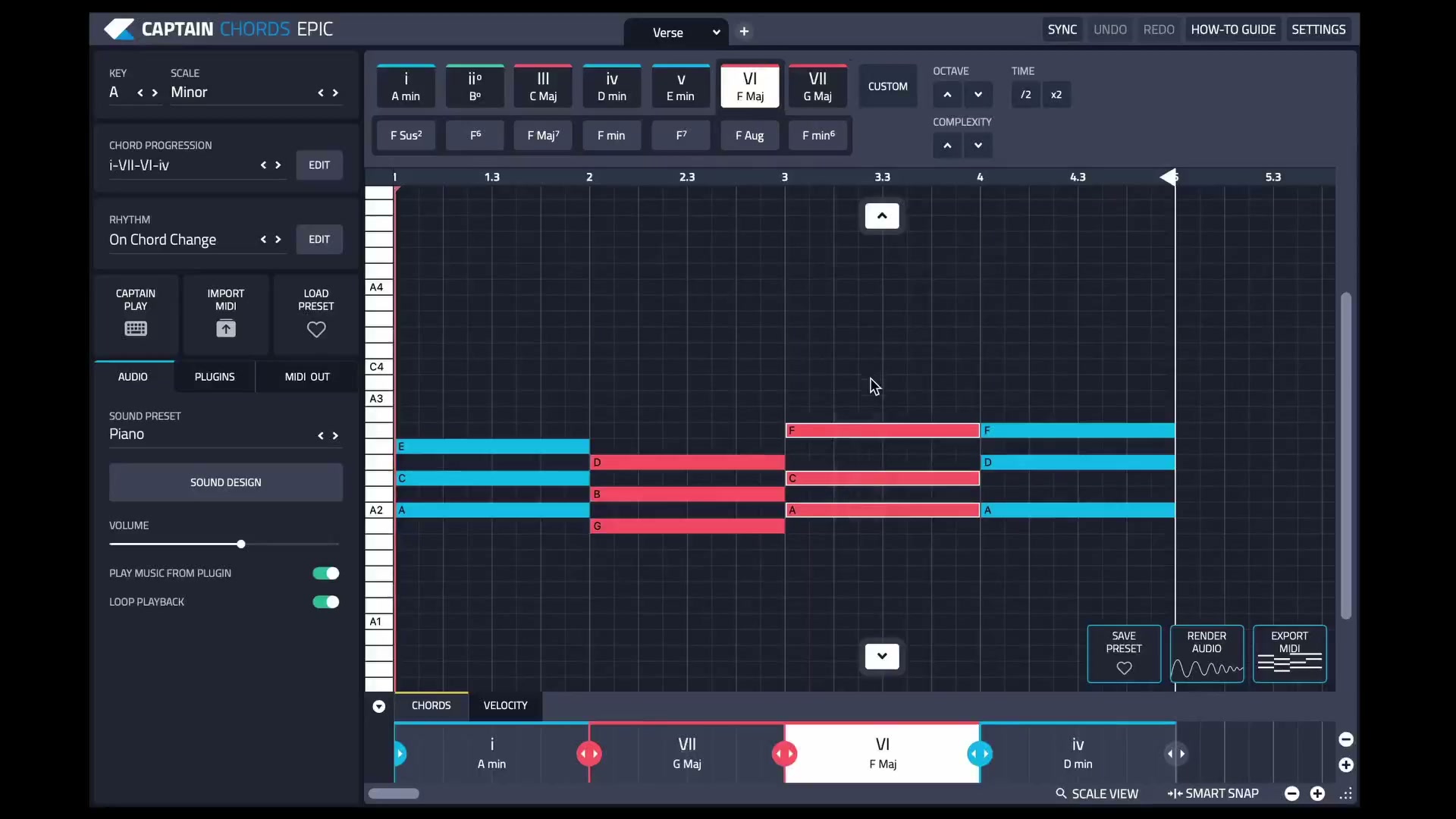
Compare the three progressions in Captain Chords. Make a sustained and a short rhythmic version of the one you choose, then export MIDI to build the breakdown and drop in your DAW.
See the current editing workflow.
The Captain Plugins 8 update video shows the canvas and selection-based editing.
Common questions
What percentage of EDM is in minor keys?
This guide does not claim a current measured percentage. EDM spans many styles, and the right key depends on the track.
Must the first chord be the tonic?
No. The centre can be established elsewhere through melody, bass and phrasing.
Should the drop use the same chords as the breakdown?
It can. Changing note length, rhythm, register and layers can transform the same harmony into a different section.