


In this article
Arrange a dance track by mapping its main sections, deciding when each part enters and shaping the energy between them. Eight- and sixteen-bar phrases are useful starting points, not mandatory lengths.
Choose the listening context
A club mix may need a clear introduction and ending for DJs. A shorter listening edit may bring the central idea forward sooner. Decide what the track is for before copying the length of a reference. Keep both versions if the material supports them.
Map the strongest section first
Build the section where drums, bass and hook work together, then duplicate it into a rough timeline. Label an introduction, first main section, contrast section and return. These are temporary markers; their purpose is to help you hear a full journey instead of polishing one loop indefinitely.
Create contrast by subtraction
Mute the bass, remove a percussion layer or shorten the hook before adding a riser. The return of a familiar element can create more impact than a new effect. Make sure the quieter section still has enough rhythmic or melodic information to hold attention.
Signal important phrase changes
A fill, held note, reversed sound or short gap can lead into a section. Place the transition so the next downbeat feels intentional. Avoid using the same fill at every boundary; save the strongest signal for the biggest change.
Check the full arrangement without editing
Export a rough version and listen from start to finish. Note where you lose interest and where a section feels rushed. Change the arrangement before adding more processing. Predictable phrasing can help a DJ, while a deliberate surprise can serve the track when it is clearly set up.
Try this in your project
Lay out a rough 64-bar version using four labeled sections. At each boundary, change just one major element. Listen once without stopping and mark any section that feels too long or too short; revise those lengths next.
Quick reference
| Focus | What to try | What to listen for |
|---|---|---|
| Section length | Start with 8 or 16 bars | A useful phrase shape, not a fixed rule |
| Contrast | Remove a main element | A clear reason for its return |
| Transition | One deliberate cue | A clean next downbeat |
Work with Captain Chords
Use Captain Chords to sketch the harmony, edit its voicing and rhythm, then develop the arrangement in your DAW.
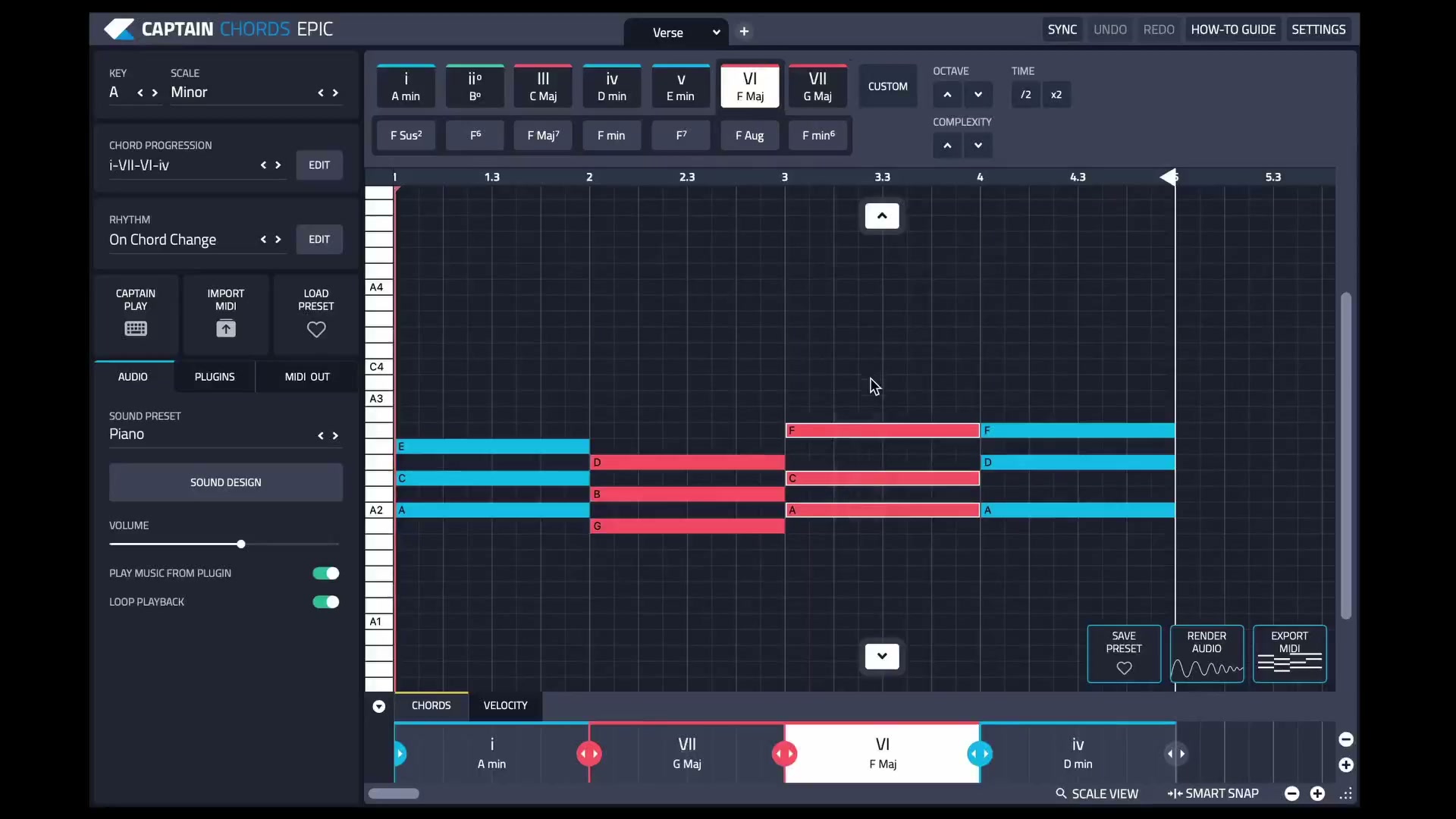
Captain Plugins 8 overview
See the update video for the current canvas and editing workflow.
Common questions
Must dance music use eight-bar sections?
No. They are common and useful, but shorter or uneven phrases can work when the musical transition is convincing.
Should every track have a breakdown?
No. Some tracks develop through gradual changes in groove and texture. Choose the structure that serves the material.