


In this article
For an indie dance starting point, combine a steady dance pulse with a recognizable chord or bass phrase. The identity comes from the performance, timbre and arrangement together. Use Captain Chords to develop the harmony, then shape the part around the groove in your DAW.
Set a groove before filling the arrangement
For this exercise, try 116 BPM with a kick on each quarter note and a clap or snare on beats two and four. Add a restrained hat pattern and listen to the relationship between the accents. This tempo is a practice choice, not a genre boundary. Leave the drums simple enough to hear what the chord rhythm contributes.
Write chords with a rhythmic job
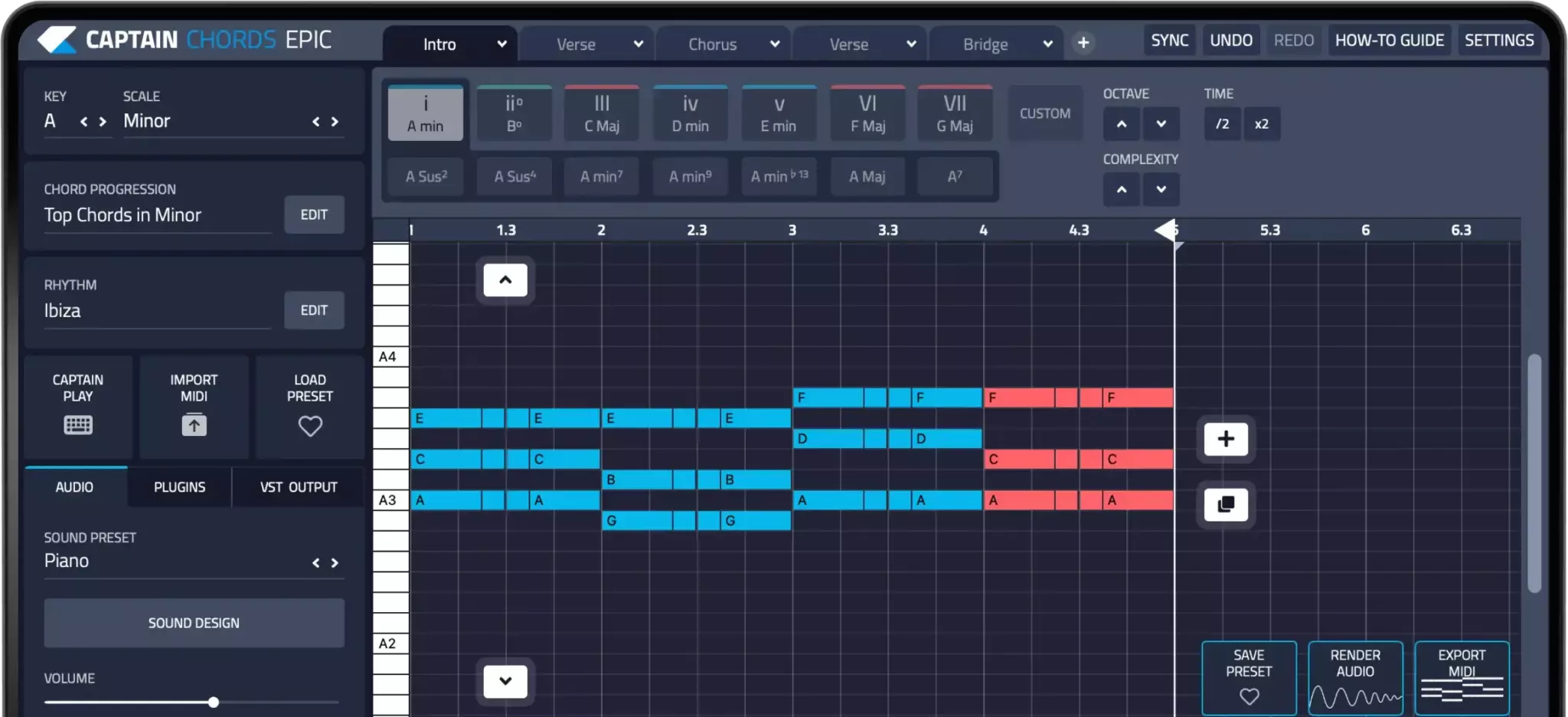
Start with Am–G–F–G and try short offbeat stabs, then compare longer held chords. Keep the same notes while changing their timing. In Captain Chords, choose the key and work on the progression before auditioning performance variations. A simple sequence with a clear rhythmic identity can give you more to arrange than a complex progression played without intention.
Voice the part around a bass line
Try moving the chord notes into a middle register and keeping common tones close. Let the bass provide the low roots rather than doubling every chord note far down the keyboard. Begin with A, G, F and G, then add an octave or short approach note where the rhythm needs a lift. Check the bass and kick together before judging the full loop.
Choose a sound that leaves room
A plucked synth, electric keyboard or guitar-like texture changes how the chord rhythm feels. Shorten releases if consecutive stabs blur together. If using a recorded guitar, check its timing and tuning against the programmed parts. Choose one prominent rhythmic texture first; several wide, sustained layers can remove the space that made the original groove effective.
Add a hook that answers the chords
Write a small melody in a register above the accompaniment and let it stop between statements. Try repeating three or four notes with a changed final note rather than continuously filling the scale. If the track will have a vocal, treat the instrumental hook as an answer or an introduction and test where it should drop out.
Make the arrangement develop through contrast
Build an opening with fewer elements, a fuller main section and a contrasting break. Use a removed bass part, altered chord rhythm or filter movement to make the return audible. Do not rely on a rising effect alone to create a transition. Export a short arrangement and listen away from the piano roll to check whether each section has a distinct role.
Try this in your project
Make an eight-bar Am–G–F–G loop at 116 BPM. Create one version with offbeat chord stabs and another with held chords. Keep the drums and bass unchanged, then choose the version that gives your hook or guide vocal the most useful space.
Quick reference
| Focus | What to try | What to check |
|---|---|---|
| Chords | Compare held notes with offbeat stabs | Rhythmic identity before extra harmony |
| Bass | Start with roots and a few answering notes | A groove that supports the kick |
| Arrangement | Remove and reintroduce a key part | A clear change between sections |
Work with Captain Chords
Use Captain Chords to sketch the harmony, edit its voicing and rhythm, then develop the arrangement in your DAW.
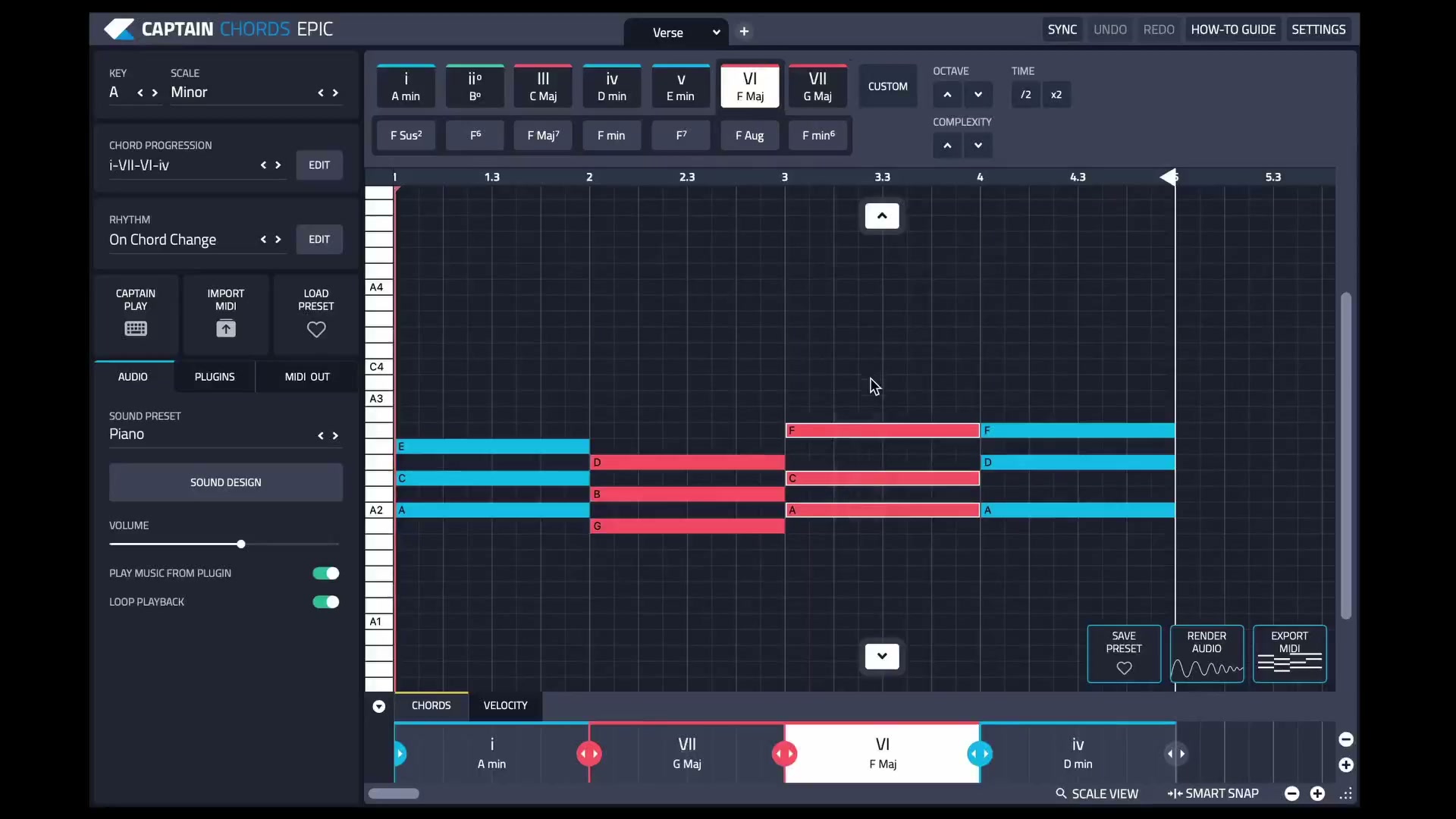
Captain Plugins 8 overview
See the update video for the current canvas and editing workflow.
Useful references
Common questions
Does indie dance require live instruments?
No. Live recordings and programmed parts are both options. Their phrasing, texture and interaction matter more than the source alone.
Can Captain Chords finish the whole track?
It helps with the chord-writing stage. Develop the full arrangement, sound design, recording and final mix in your DAW.