


In this article
The B major chord contains B–D♯–F♯. It is a major triad: a root, major third and perfect fifth. Play the notes together, or spread them across time as an arpeggio. Its standard chord symbol is B.
Hear the examples.
Choose an example, then press Play. Compare the notes as well as the sound.
B major
B–D♯–F♯: root, major third and perfect fifth.
These are not Captain Plugins audio.Ready to play
Build the chord from its intervals
Start on B. Count 4 semitones up to D♯, then continue to seven semitones above the root for F♯. Count the starting note as zero and include every black and white key. The two stacked intervals are four then three semitones.
Compare it with B minor: B–D–F♯. Only the third changes. This is a parallel chord comparison, because both chords have the same root. The sound and tempo can affect the mood, but they do not change the notes that define the chord.
Play root position and both inversions
B–D♯–F♯ is root position. Put D♯ at the bottom for first inversion: D♯–F♯–B. Put F♯ at the bottom for second inversion: F♯–B–D♯. These are rearrangements of the same three chord tones, not new extensions.
The slash symbols B/D♯ and B/F♯ name the bass note explicitly. If another instrument plays a lower B, the total harmony may still be in root position. Listen to the whole arrangement when deciding what the bass is doing. Compare the examples above on the same sound before adding effects.
Separate the chord from the key
The B major scale is B–C♯–D♯–E–F♯–G♯–A♯. Building triads on those notes gives B, C♯m, D♯m, E, F♯, G♯m, A♯dim. The chord B is the tonic triad in that key, but it can appear in other keys too.
The relative minor key is G♯ minor. It shares the notes of this major scale, while making a different note feel like home. Shared notes are useful when writing, but do not guarantee that any two parts will sound good when layered. Check the melody, bass and voicing together.
Write a four-bar exercise
Use B–F♯–G♯m–E, one chord per bar. In B major, this is I–V–vi–IV. First keep the note lengths and instrument unchanged so you can hear the harmony. Then move individual notes by octaves to reduce awkward jumps between chords.
Spell the chord B–D♯–F♯. The root is B, not D. Its relative minor key is G♯ minor; using that spelling keeps the shared five-sharp key signature clear.
Choose an extension or a different rhythm
Add A♯ to B–D♯–F♯ to make Bmaj7. A suspended chord does something different: Bsus2 replaces D♯ with C♯, while Bsus4 replaces it with E. Keeping the third and adding another note creates an added-note chord instead.
Keep a copy of the plain triads. Try one change at a time: a shorter stab, an offbeat entrance, one added seventh, or a higher voicing. A busy vocal may work better with fewer notes. Judge the result in the track, not from the chord symbol alone.
Keep the notes in view.
| Symbol | Notes, low to high | Meaning |
|---|---|---|
| B | B–D♯–F♯ | Root position |
| B/D♯ | D♯–F♯–B | First inversion |
| B/F♯ | F♯–B–D♯ | Second inversion |
| Bmaj7 | B–D♯–F♯–A♯ | Adds the major seventh |
| Bsus2 | B–C♯–F♯ | Second replaces third |
| Bsus4 | B–E–F♯ | Fourth replaces third |
Try it in Captain Chords.
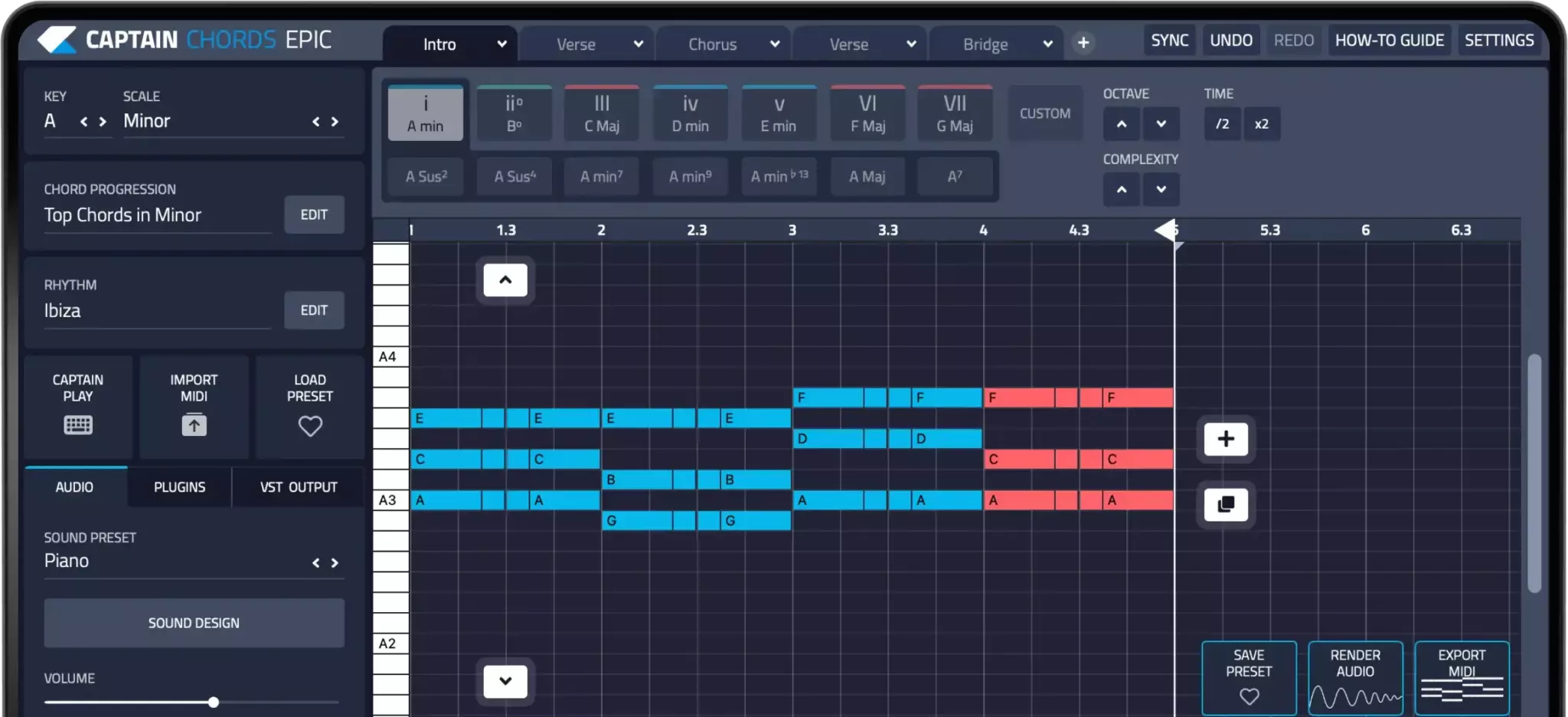
Set up B–F♯–G♯m–E in Captain Chords. Compare the triads with inversions, then adjust note lengths against your drum pattern. Export the MIDI when you are ready to develop the arrangement in your DAW.
See the current editing workflow.
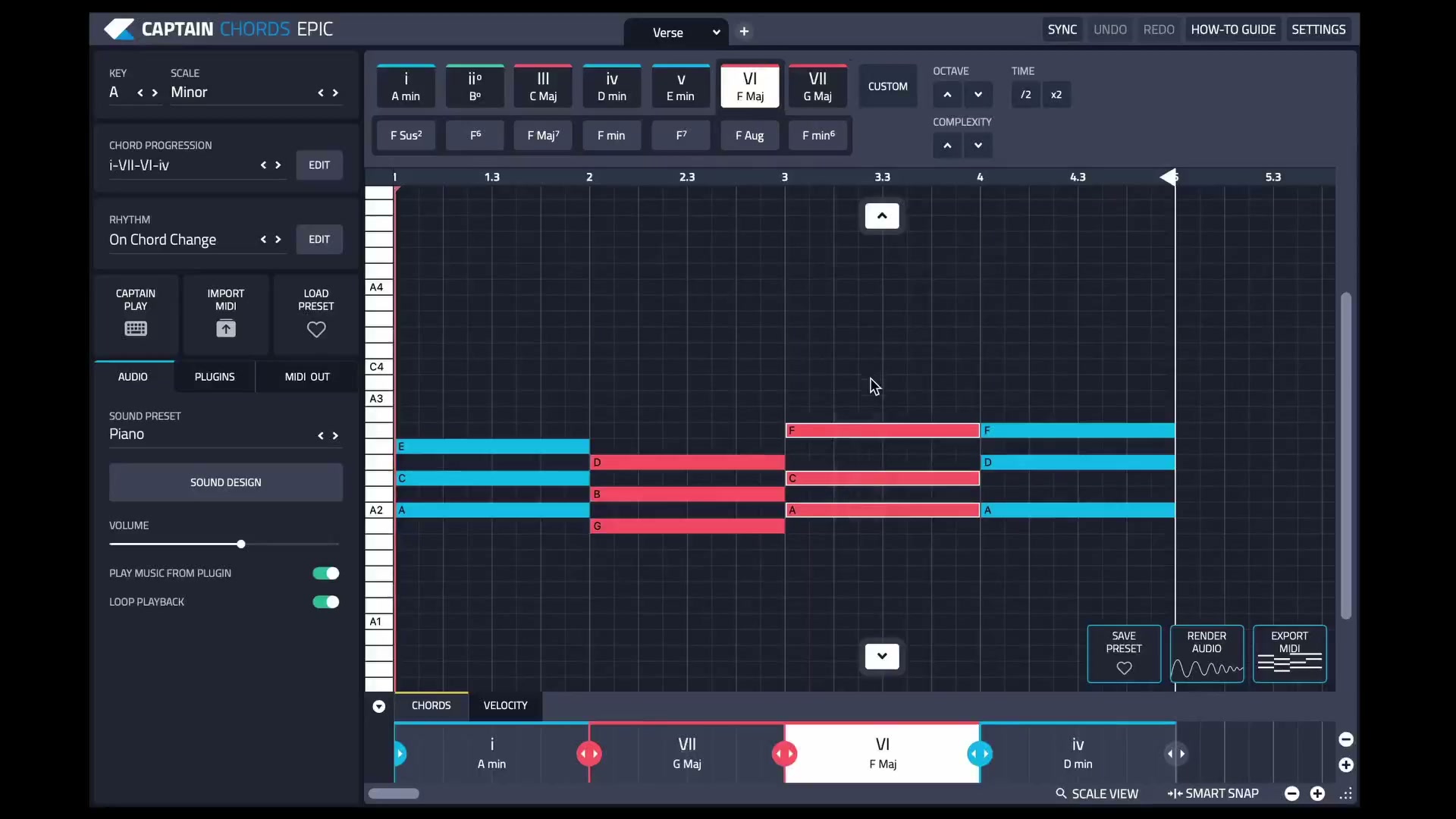
The Captain Plugins 8 update video shows the canvas and selection-based editing.
Common questions
What notes are in B major?
B–D♯–F♯. The root is B, the third is D♯, and the fifth is F♯.
Is B/D♯ a different chord?
It is an inversion of B major, with D♯ in the bass. It uses the same chord tones; their order and register change.
Does this key have a fixed mood?
No. Register, melody, rhythm, performance and sound all affect the result. Choose a key for the musical parts and the singer’s range rather than treating a note name as an emotional guarantee.