


In this article
For a Rod Wave type-beat exercise, focus on a memorable melodic accompaniment and a strong but uncluttered drum foundation. Treat the artist reference as a listening direction, not a fixed key, tempo or recipe that describes every recording.
Choose the vocal space before the instrument sound
Imagine where a sung or melodic rap phrase will sit. A busy top melody can compete with that role even when it sounds attractive alone. Start with a simple piano or guitar-like part and leave gaps near phrase endings. Hum a rough vocal line over it to test whether the accompaniment leaves a clear route through the arrangement.
Write a progression with a deliberate bass movement
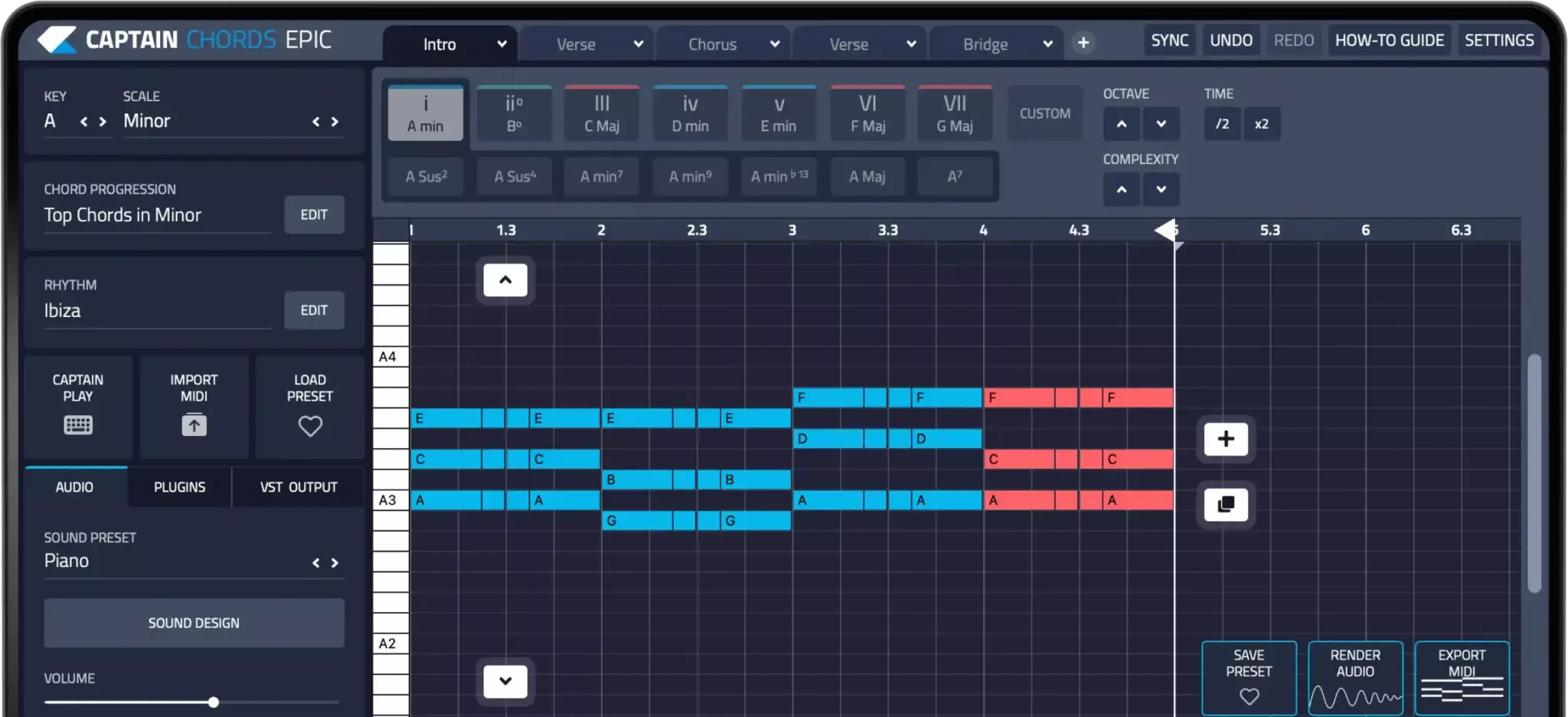
Try an original four-bar loop of Am–F–C–G. Play one chord per bar at first, then move the upper notes closer together. The progression itself does not create the style; its rhythm, register and sound matter. Let the bass identify the roots while the chord part stays out of the lowest register.
Give the main phrase a recognizable shape
Use a short figure such as E–G–A–G over the opening chord, then answer with fewer notes. Change the timing until it feels like a phrase rather than a scale exercise. Keep one high point and one clear ending. Repetition is useful when the vocal needs a dependable musical setting rather than constant new information.
Build drums around the half-time feel
Choose a comfortable session tempo and identify whether you are counting the main pulse in half-time or double-time. Place the snare or clap to establish that feel before adding hat detail. Add kick hits where they support the bass rhythm, and reserve fills for transitions or spaces left by the main phrase.
Control the sustained bass
Tune a pitched 808 by its stable portion, then compare each note with the harmony. Shorten releases where the next root arrives so notes do not blur together. If a separate kick is used, decide which sound provides the transient. Adding both at full strength can make the low end less defined rather than more powerful.
Arrange for a vocal performance
Create a lighter verse and a fuller hook using the same central idea. Remove a melodic layer when the vocal becomes more active, and bring it back between phrases. Check the beat at a lower listening level with a guide vocal. If the accompaniment still demands all your attention, simplify its rhythm or register.
Listen to the example
An existing Mixed In Key tutorial example for listening to the melodic role and sound. It is separate from the new written exercise above.
An existing Mixed In Key tutorial example for listening to drum and low-end placement. Compare its rhythmic role with the melody example.
Try this in your project
Make an eight-bar Am–F–C–G sketch with piano, bass and drums. Record a hummed guide vocal, then remove every accompaniment note that competes with its strongest phrase. Export the instrumental and guide version to compare how the beat supports a voice.
Quick reference
| Focus | What to try | What to listen for |
|---|---|---|
| Harmony | Use close voicings above the bass | Movement without a crowded register |
| Drums | Establish the backbeat before fills | A steady frame for the vocal |
| Arrangement | Reduce layers during active phrases | Space for an expressive lead |
Work with Captain Melody
Develop the phrase in Captain Melody, then edit the notes and rhythm around the musical idea you want to keep.
Captain Plugins 8 overview
See the update video for the current canvas and editing workflow.
Common questions
Is there one correct key for this kind of beat?
No. Choose a key that suits the vocalist and the register of the sounds. An artist reference does not prescribe a universal key.
Would a piano-only example show the whole production approach?
No. It can explain the harmony, but drums, bass, phrasing and vocal space need to be heard together to demonstrate the beat.