


In this article
For a Gunna type-beat exercise, explore a relaxed melodic loop with a precise drum-and-bass pocket. The useful work is in note timing, decay and empty space, not in assigning one fixed scale or preset to the artist.
Begin with a short plucked phrase
Use a guitar-like patch, a clean pluck or a recorded instrument you own. Try a two-bar idea using A, C, E and G over an A-centred bass. Let some notes ring and stop others early. The difference between sustained and muted notes gives the phrase a rhythmic identity before effects are added.
Leave the harmony light enough to move
Start with Am and Fmaj7, voiced above the bass. The shared A, C and E notes let you imply movement with only a small change. You do not need every chord tone on every beat. A sparse voicing can leave more room for a vocal and a moving 808 than a thick keyboard block.
Choose the drum accents before the rolls
Set a backbeat and a few kick placements that respond to the pluck. Listen to the space between them. Add a short hat fill at the end of the phrase, then remove it and compare. A fill earns its place when it improves the return or answers a musical gap, not because the grid can hold it.
Make the bass reinforce the pocket
Use short notes where the kick needs a clear attack and longer notes where the groove opens up. Tune the sustained pitch of the bass sample, and check any glide against the next chord. A bass line that changes constantly can weaken a relaxed loop; repeat enough of the pattern for the movement to feel intentional.
Use ambience without washing out the attack
A small delay or reverb can give the pluck depth, but its first transient should remain clear. Filter or shorten the tail if it fills every gap. Compare the processed version at a matched level with the dry phrase. The rhythmic pocket depends on the spaces between sounds as much as the sounds themselves.
Develop the beat through small changes
Mute the pluck for a bar, remove a kick or introduce a quiet answering texture at the end of a section. Keep the main loop familiar while giving the vocalist places to breathe. Check the verse with a rough flow recorded over it; an instrumental that sounds sparse alone may be correctly arranged for a voice.
Listen to the example
An existing Mixed In Key tutorial example for listening to the melodic role and sound. It is separate from the new written exercise above.
An existing Mixed In Key tutorial example for listening to drum and low-end placement. Compare its rhythmic role with the melody example.
Try this in your project
Build an eight-bar Am–Fmaj7 loop with one pluck, bass and drums. Make one version with long pluck tails and one with selective muted notes. Keep the MIDI pitches fixed and compare how each version changes the kick and vocal space.
Quick reference
| Focus | What to try | What to listen for |
|---|---|---|
| Pluck | Mix ringing and muted notes | A clear rhythmic identity |
| Bass | Alternate short and sustained notes | A pocket that follows the kick |
| Space | Control ambience tails | Depth without filling every gap |
Work with Captain Deep
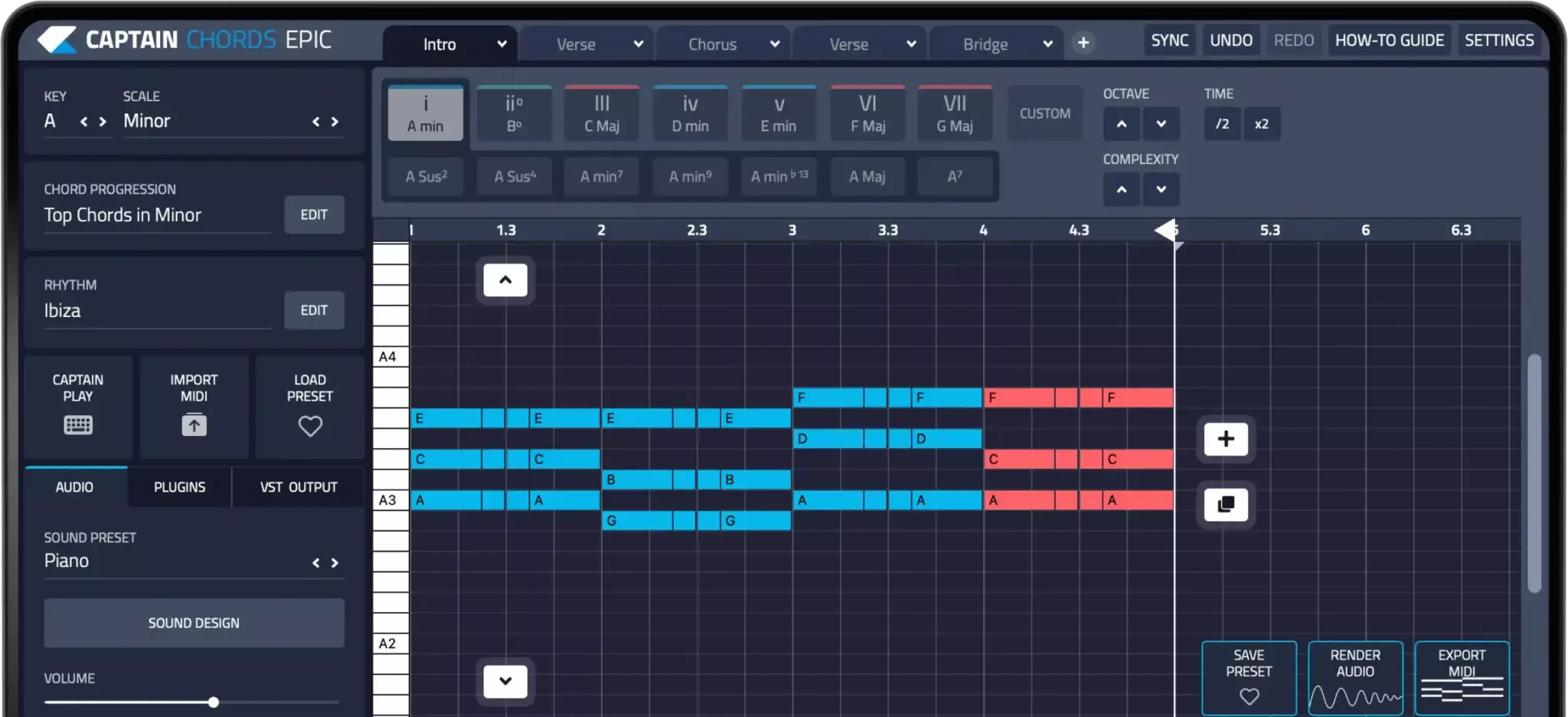
Use Captain Deep to write a bass part alongside your Captain Chords progression. Check the note lengths and rhythm against the drums.
Captain Plugins 8 overview
See the update video for the current canvas and editing workflow.
Common questions
Do I need a particular guitar loop pack?
No. Write or record an original phrase, or use material you have permission to use. The rhythm and arrangement matter more than a specific pack.
Can the bass use notes outside the chord roots?
Yes. Passing notes can connect roots, but check their placement and duration against the harmony.