


In this article
A useful Lil Baby type-beat exercise combines a memorable accompaniment with a drum-and-bass pattern that supports an active vocal. Focus on the pocket and phrase length instead of assuming one key or tempo fits every performance.
Choose one main melodic statement
Start with a piano, pluck, guitar-like sound or restrained orchestral texture. Write a phrase that can repeat without needing constant decoration. A short arpeggio over Dm–B♭ can provide enough movement for an exercise. Keep the sound in a register that leaves space for the voice and avoid duplicating its rhythm on several instruments.
Make the chord changes easy to hear
Use a simple bass root underneath each harmony and keep the upper voices close. If the accompaniment has many repeated notes, allow the chord change to occur at a clear phrase boundary. Listen to the loop on a plain piano before choosing a larger sound. This separates a useful harmonic idea from excitement created only by the preset.
Place kicks around the vocal rhythm
Record a rough spoken or hummed guide, then place the main kick accents where they reinforce the cadence. Not every syllable needs a drum hit. Leave some gaps so the flow can move independently. Check whether a kick at the end of the bar improves the return or makes the phrase feel rushed.
Keep the 808 phrase controlled
Start with the roots and a small number of repeated notes. Tune the sample’s sustained pitch, shorten overlaps and check its response to different velocities. Add a passing note only where it connects two targets clearly. If the bass moves more than the lead performance, simplify it and compare the full arrangement again.
Use hat detail as punctuation
A steady hat pattern can establish forward movement; a short roll can emphasize a transition. Put the strongest subdivisions in selected gaps rather than every available beat. Vary velocity so the main pulse remains readable. The pattern should feel intentional when heard with the vocal, not only when the drums are soloed.
Create section contrast without abandoning the loop
Use the same central motif in the verse and hook, but change its density, octave or supporting texture. A brief bass dropout can prepare the next section. Listen to the whole arrangement and mark where the beat needs less activity. Often the best change is removing a competing layer at the vocal’s most important moment.
Listen to the example
An existing Mixed In Key tutorial example for listening to the melodic role and sound. It is separate from the new written exercise above.
An existing Mixed In Key tutorial example for listening to drum and low-end placement. Compare its rhythmic role with the melody example.
Try this in your project
Create an eight-bar Dm–B♭ loop with one main instrument. Record a guide flow and build kick and bass accents around it. Make a second drum version with half as many fills, then choose the one that supports the vocal most clearly.
Quick reference
| Focus | What to try | What to listen for |
|---|---|---|
| Accompaniment | One repeated melodic statement | A stable frame for the voice |
| Kick and bass | Build accents around the guide flow | A pocket with deliberate gaps |
| Variation | Change density between sections | Contrast without losing the central idea |
Work with Captain Deep
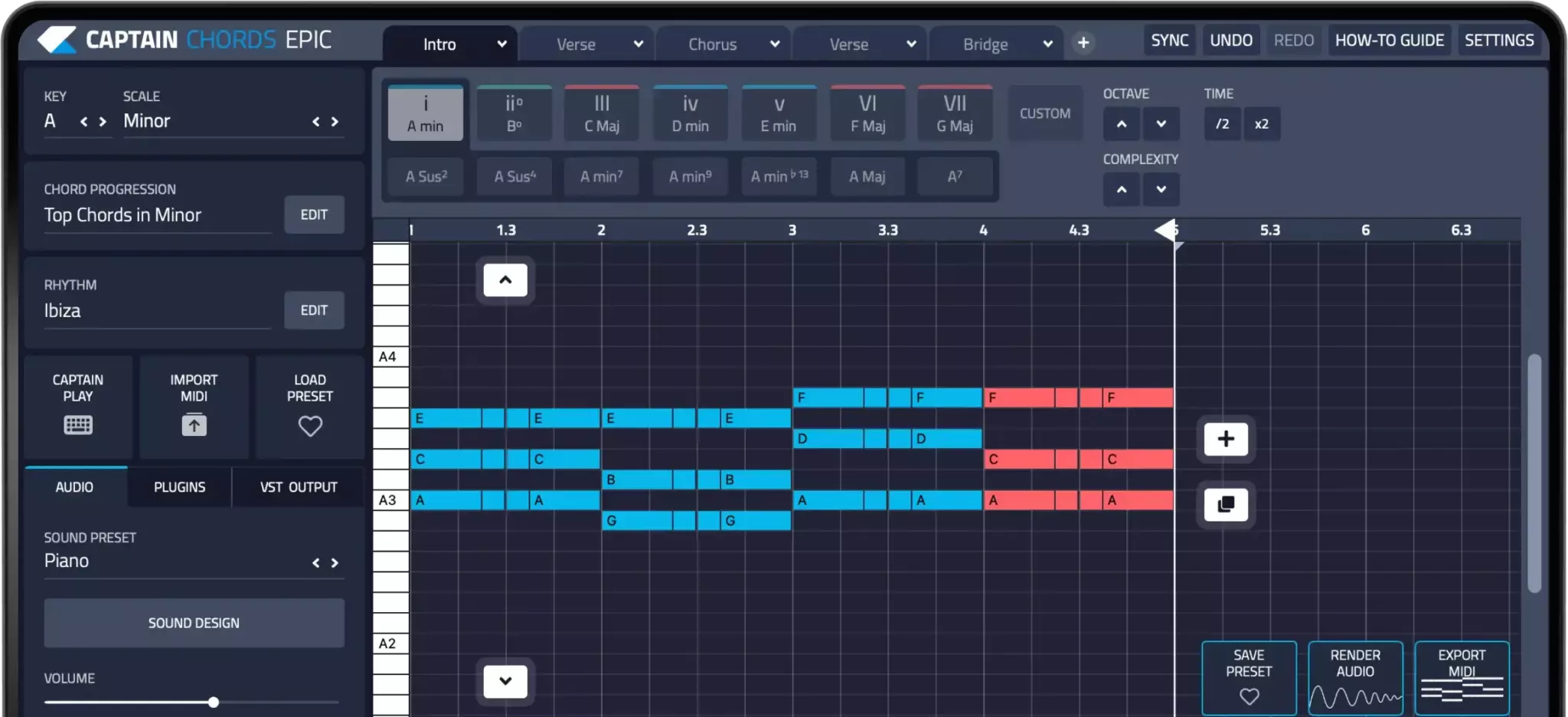
Use Captain Deep to write a bass part alongside your Captain Chords progression. Check the note lengths and rhythm against the drums.
Captain Plugins 8 overview
See the update video for the current canvas and editing workflow.
Common questions
Must the accompaniment be orchestral?
No. Several instrument choices can serve the same role. The phrase, register and relationship to the vocal are more important.
Should the 808 follow every kick?
Not necessarily. Some shared accents help establish the pocket, while independent bass notes can connect the harmony.