


In this article
G major contains G, A, B, C, D, E and F-sharp. Its diatonic triads are G, Am, Bm, C, D, Em and F-sharp diminished. G major is also a chord, containing G, B and D; the key describes a wider tonal context.
Know the scale before choosing chords
The G major scale has one sharp: F-sharp. Start on G and follow the major-scale pattern of whole, whole, half, whole, whole, whole and half steps. Playing these notes alone does not establish a key automatically; phrasing and harmony help make G feel like the tonal center.
Build the seven diatonic triads
Stack alternating scale notes above each degree. This gives G, Am, Bm, C, D, Em and F-sharp diminished: I, ii, iii, IV, V, vi and vii diminished. For example, Am contains A–C–E, while D contains D–F-sharp–A. These chords are a starting palette, not a requirement to use all seven.
Try a four-chord progression
Play G–D–Em–C, or I–V–vi–IV, with each chord lasting one bar. Then compare G–C–D–G, which returns more directly to the tonic. Keep the sound and tempo unchanged so you can hear the different harmonic movement rather than only a change in production.
Use the dominant to return home
D is the dominant chord in G major. Adding C makes D7: D–F-sharp–A–C. The F-sharp can resolve upward to G and the C downward to B when D7 moves to G. Use that movement at a phrase ending when you want a more definite arrival.
Distinguish G major from E minor
G major and E minor share the same key signature, but emphasize different tonal centers. A passage that settles on Em may feel minor even though its notes belong to the G major scale. Listen to the bass, phrase endings and important melody notes before deciding how the passage functions.
Hear G major and its return chord
The first example outlines G–C–D–G. The second adds C natural to D, turning D major into D7 and making the return to G more explicit.
A · G–C–D–G
Three major triads establish a simple I–IV–V–I progression.
G–B–D | C–E–G | D–F♯–A | G–B–D.
Ready to play
Original synthesized lesson examples with a simple piano-like tone. These illustrate the musical idea; they are not recordings of Captain Plugins or finished genre productions.
Try this in your project
Write G–D–Em–C for four bars. Repeat it, replacing the final C with D7 and resolving to G at the next downbeat. Write a short melody that ends on G or B at that resolution, then compare the two endings.
Quick reference
| Focus | What to try | What to listen for |
|---|---|---|
| I and IV | G: G–B–D; C: C–E–G | Stable tonic and a contrasting major chord |
| V and vi | D: D–F-sharp–A; Em: E–G–B | Dominant movement and the relative-minor chord |
| ii, iii and vii° | Am: A–C–E; Bm: B–D–F-sharp; F-sharp dim: F-sharp–A–C | Other diatonic colors |
Work with Captain Chords
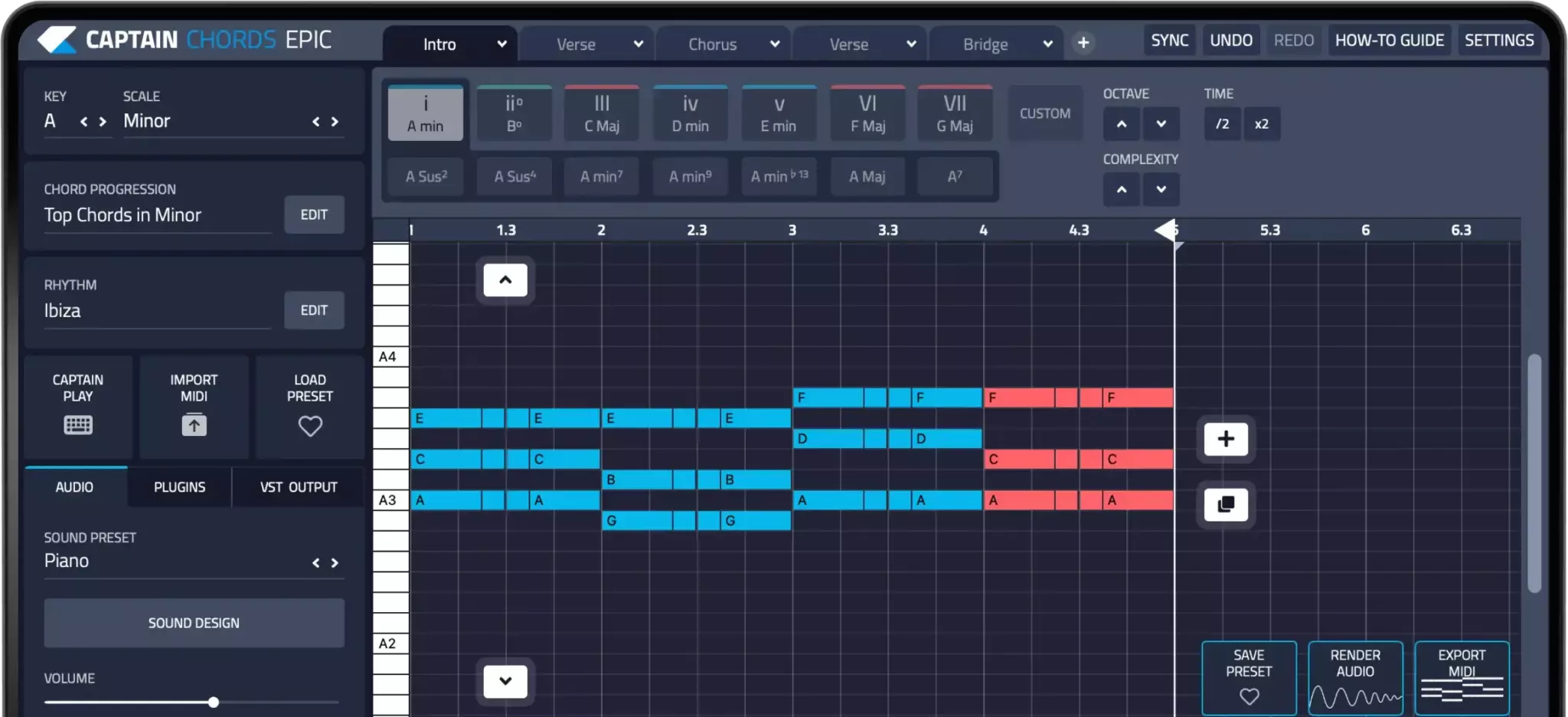
Use Captain Chords to sketch the harmony, edit its voicing and rhythm, then develop the arrangement in your DAW.
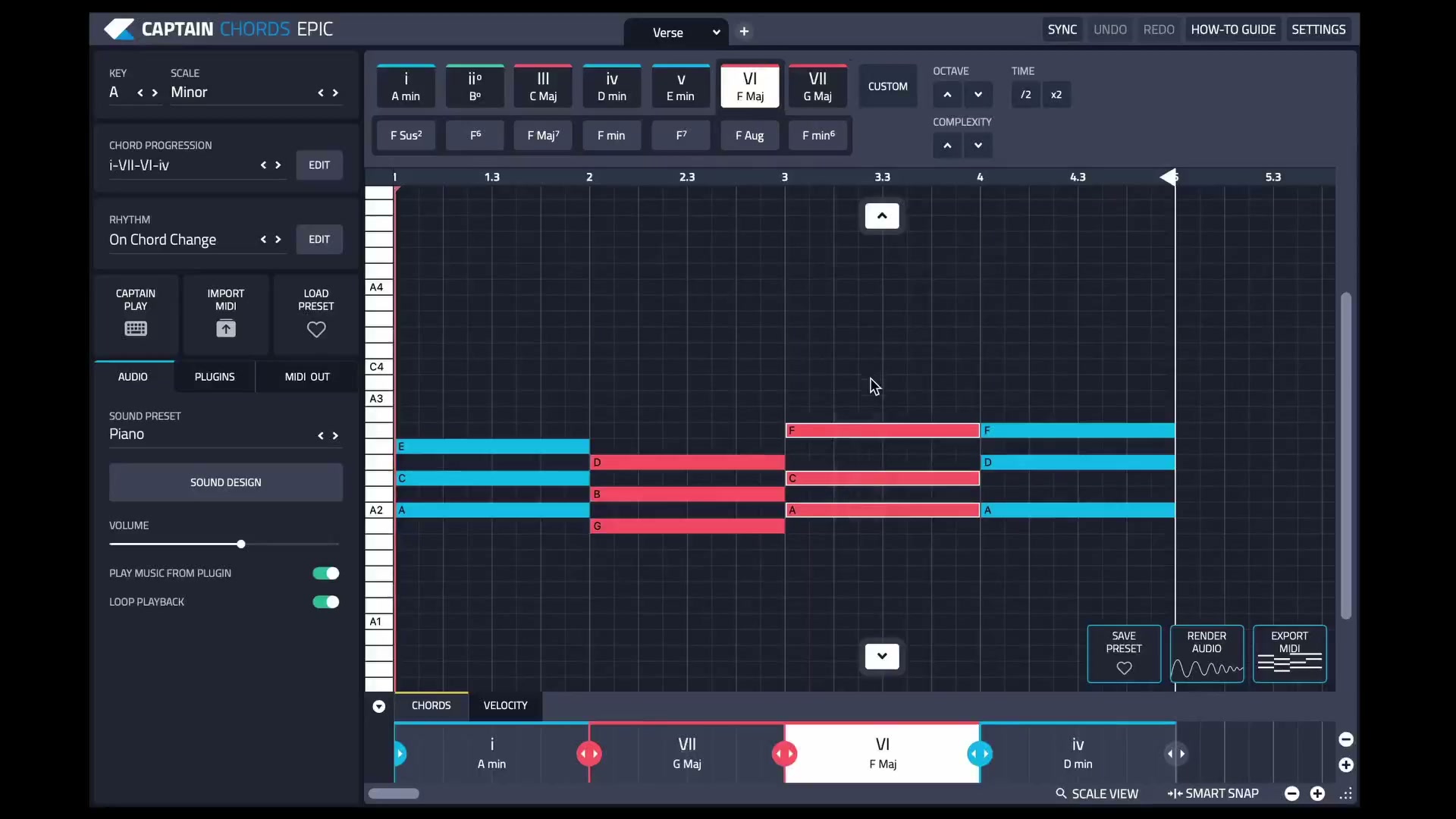
Captain Plugins 8 overview
See the update video for the current canvas and editing workflow.
Common questions
Is G major the same as the G chord?
No. G major can name the three-note chord G–B–D or the key centered on G. The context tells you which meaning is intended.
Can a song in G major use notes outside the scale?
Yes. Chromatic notes and borrowed chords can be deliberate choices. Check their musical function rather than treating every outside note as an error.