


In this article
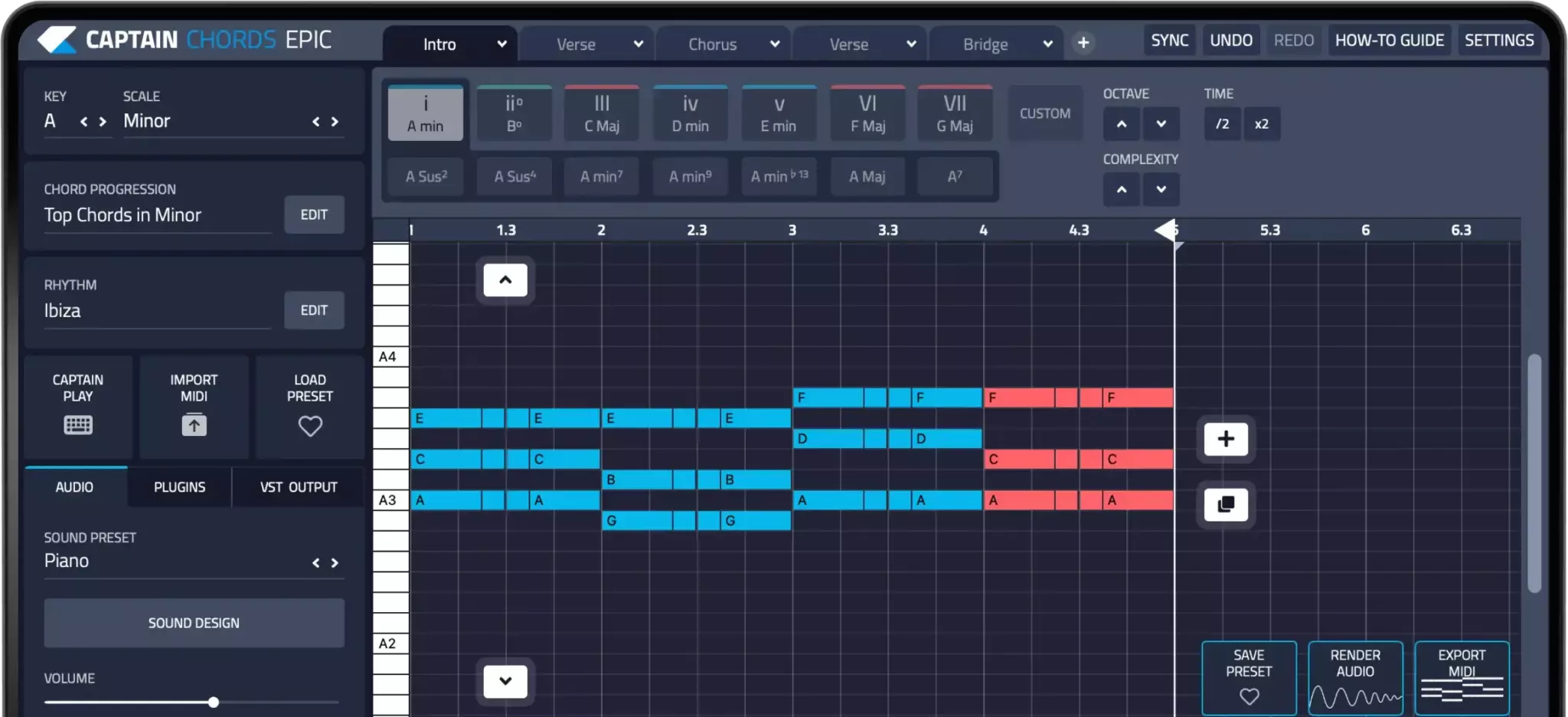
A natural minor contains A, B, C, D, E, F and G. Its diatonic triads are Am, B diminished, C, Dm, Em, F and G. A minor shares its key signature with C major, but A is the tonal center.
Start with the tonic triad
The A minor chord contains A–C–E: root, minor third and fifth. Play it as a block chord and then as separate notes. Different inversions keep the same chord identity while placing C or E at the bottom; the lowest note can change how the progression moves.
Learn the natural-minor chord palette
Build triads on the seven scale degrees to get Am, B diminished, C, Dm, Em, F and G. These are i, ii diminished, III, iv, v, VI and VII. You do not need to use all of them. Start with three or four that support a clear phrase.
Compare two simple progressions
Am–F–C–G gives a repeating i–VI–III–VII loop. Am–Dm–Em–Am moves through i–iv–v–i and returns directly to the tonic. Try both with the same rhythm, bass register and instrument, then write a short melody that fits the progression you prefer.
Use E7 for a stronger return
E7 contains E–G-sharp–B–D. G-sharp is outside A natural minor and leads upward by a semitone into A. This raised seventh is part of A harmonic minor. Compare Em–Am with E7–Am to hear how one changed scale degree affects the arrival.
Make A sound like home
A minor and C major use the same natural notes, so a white-key melody alone does not settle the distinction. Give A or Am meaningful phrase endings, bass emphasis or sustained notes. If the music instead consistently resolves to C, C major may describe its tonal center better.
Hear the raised seventh in A minor
Both sketches use Am–Dm and return to Am. In the second, E7 introduces G-sharp instead of the G natural in Em.
A · Am–Dm–Em–Am
Em is the minor v chord from A natural minor.
A–C–E | D–F–A | E–G–B | A–C–E.
Ready to play
Original synthesized lesson examples with a simple piano-like tone. These illustrate the musical idea; they are not recordings of Captain Plugins or finished genre productions.
Try this in your project
Write Am–F–Dm–E7 and repeat it. On the E7 bar, try G-sharp resolving to A at the start of the next phrase. Then use Em and G natural instead, and choose the version that suits the musical mood.
Quick reference
| Focus | What to try | What to listen for |
|---|---|---|
| Tonic | Am: A–C–E | The point of return |
| Natural-minor choices | Dm: D–F–A; Em: E–G–B; F: F–A–C | A useful starting chord palette |
| Raised leading tone | E7: E–G-sharp–B–D | G-sharp resolving to A |
Work with Captain Chords
Use Captain Chords to sketch the harmony, edit its voicing and rhythm, then develop the arrangement in your DAW.
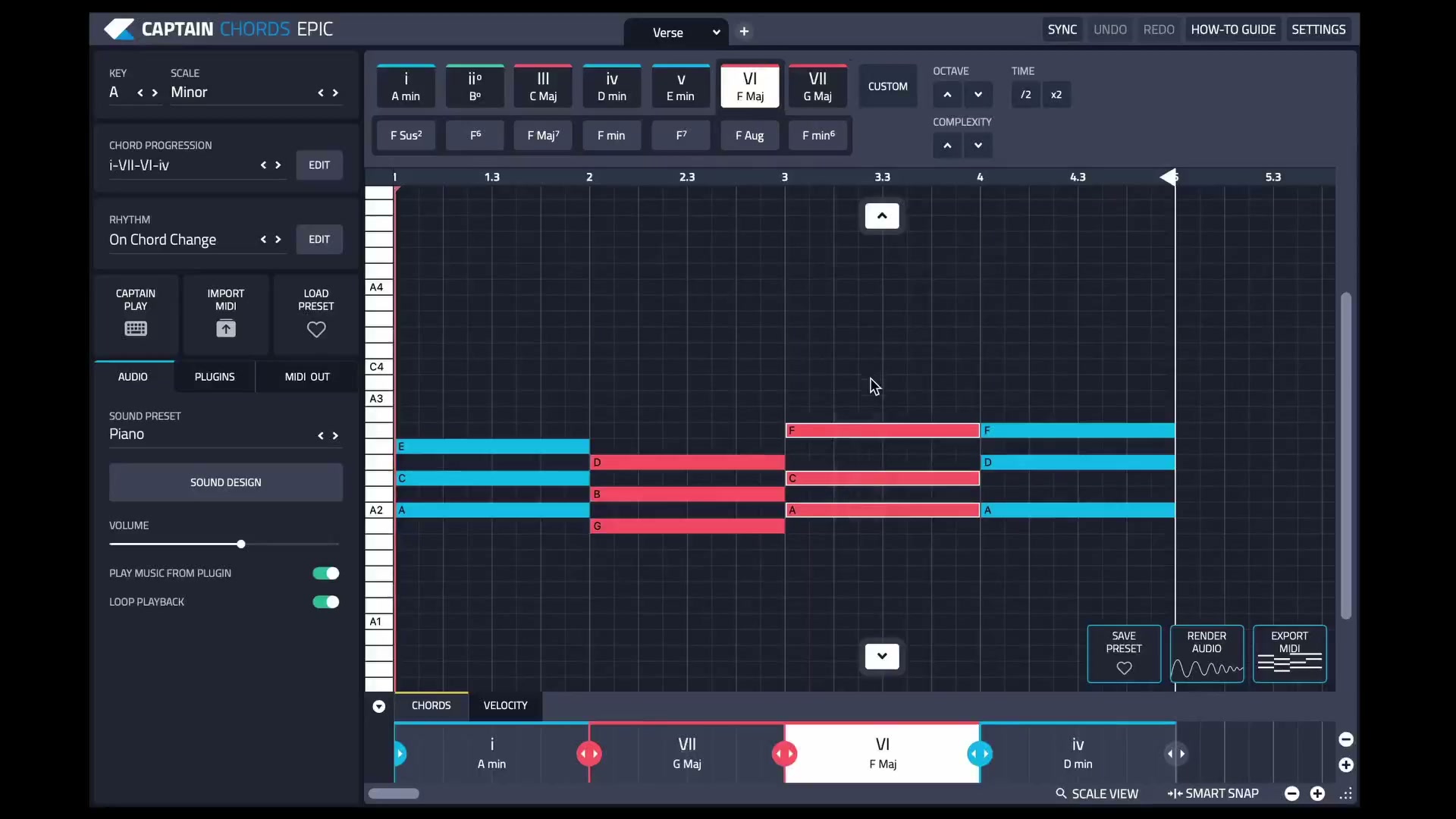
Captain Plugins 8 overview
See the update video for the current canvas and editing workflow.
Common questions
Does A minor only use white keys?
A natural minor does on a piano, but music in A minor often includes chromatic notes such as G-sharp in E7. Key and scale are related, but not identical restrictions.
Is every song using Am in A minor?
No. Am also appears in C major and other keys. Listen to the tonal center and surrounding harmony.