


In this article
Start a drum-and-bass track by making the drums and bass work together, then add harmony and an arrangement around them. Fast tempo does not require every part to be busy. The gaps, accents and contrast between sections are what make the groove readable.
Set a simple two-step framework
For this exercise, use 172 BPM and put the main snare on beats two and four. Begin with a kick on beat one and another around the second half of beat three, then adjust to suit the groove. Keep this skeleton audible while adding detail. The tempo and pattern are a practice starting point, not a definition of every drum-and-bass style.
Add break detail without losing the backbeat
Use quiet ghost snares, hats or a suitably licensed break to add movement around the main hits. Trim tails where they mask the next transient and vary selected velocities. If layering a break, check its timing against the programmed drums across the whole phrase. Avoid stacking several loud snares simply because each one sounds strong in isolation.
Write a bass phrase with clear rests
Start with a few root notes and decide which bass attacks reinforce the kick. A sustained sub can supply weight while a separate midrange texture provides character, but they should behave like one musical part. Check tuning and note overlap. If using layers, compare the combined low end with each source alone before adding more processing.
Give chords and melody separate roles
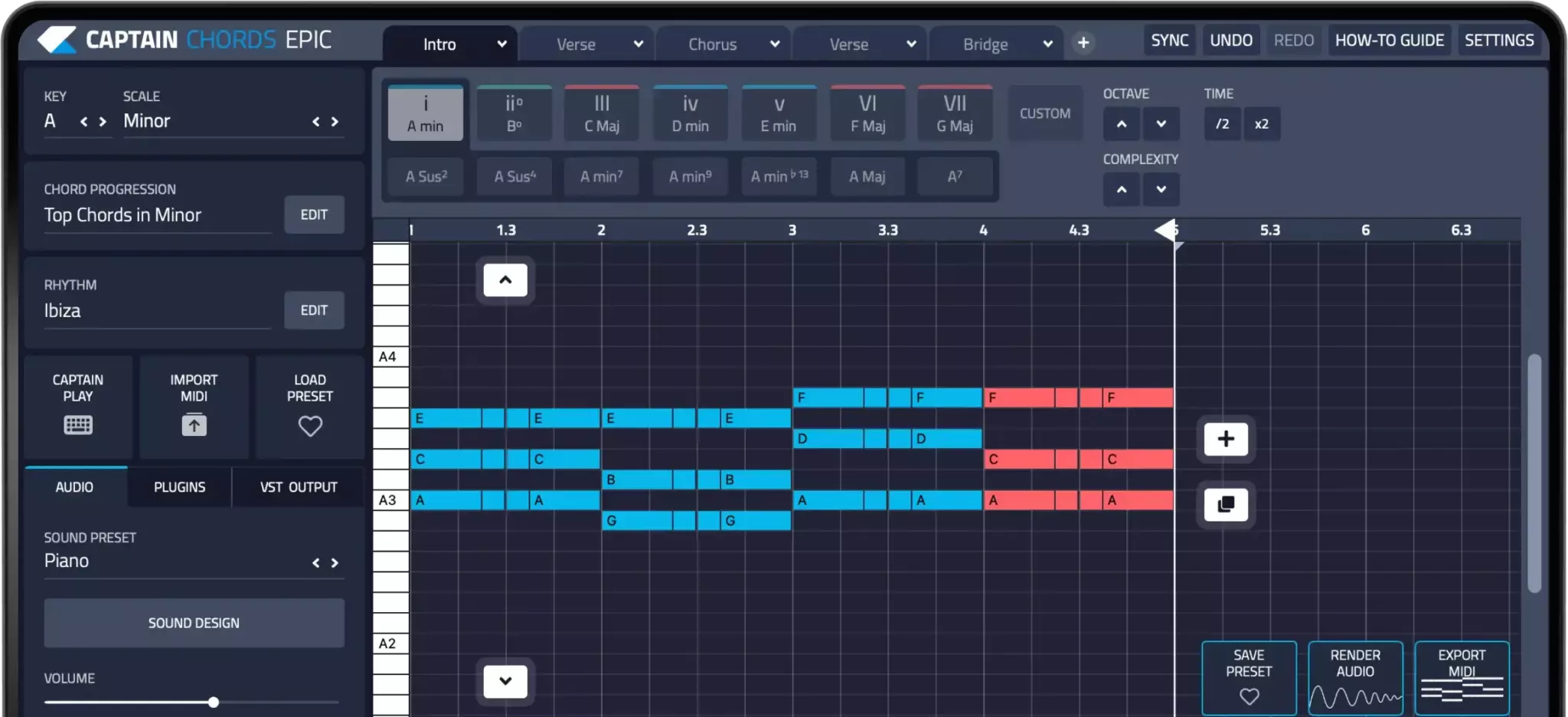
A pad can establish the harmonic background while a shorter piano or pluck supplies a recognizable phrase. Keep the lower chord voices out of the bass’s way and choose note lengths that leave space for drums. In Captain Chords, develop the progression first; then test the melody against the changing chords rather than only against a scale label.
Create contrast before the drop
Build an intro or break with fewer low-frequency elements, then let the main groove establish itself clearly. A drum fill, changed bass ending or moment of silence can announce the transition. Avoid filling every gap with an effect. Listen to whether the drop feels like a meaningful return of rhythm and weight, not only an increase in loudness.
Use the production examples to hear the roles
The existing examples below include drums, bass, piano and a complete production. Compare an isolated part with the full mix to hear how much space it occupies. They demonstrate one arrangement and sound palette; the 172 BPM exercise above is a separate sketch. Use the example to study relationships, then choose sounds appropriate to your own direction within the genre.
Listen to the example
Listen to how the drums and bass establish the groove while the melodic parts sit above them.
Focus on the main backbeat and the quieter details around it, then locate those details in the full example.
Listen for the starts, rests and releases in the bass phrase rather than only its tone.
Hear the melodic part on its own, then compare its register and space against the complete production.
Try this in your project
At 172 BPM, make an eight-bar drum-and-bass loop using drums, one bass sound and a short keyboard phrase. Duplicate it and remove the bass and main kick for four bars before the return. Compare the transition with and without an added riser.
Quick reference
| Focus | What to try | What to check |
|---|---|---|
| Drums | Keep the main snare clear beneath detail | A readable backbeat at fast tempo |
| Bass | Control note length and layer overlap | Weight with defined gaps |
| Arrangement | Remove key elements before their return | Contrast that comes from the music |
Work with Captain Beat
Use Captain Beat to sketch the drum part, then compare its pattern and sound choices in the full arrangement.
Captain Plugins 8 overview
See the update video for the current canvas and editing workflow.
Common questions
Does every drum-and-bass track need a sampled break?
No. Programmed drums, recorded breaks and combinations can all work. The timing, sound and relationship between hits determine the groove.
Should the bass always follow every chord root?
No. Roots are a useful starting point, but sustained tones, passing notes and rhythmic variation are options. Check them against the actual chords and phrase.