


In this article
C major contains C, D, E, F, G, A and B. Its diatonic triads are C, Dm, Em, F, G, Am and B diminished. The C major chord contains C–E–G, while the key describes music whose tonal center is C.
Learn the scale and its intervals
On a piano, the C major scale uses the white keys from C to the next C. The interval pattern is whole, whole, half, whole, whole, whole and half steps. That pattern defines the major scale; the absence of black keys is specific to this starting note.
Build chords by stacking thirds
Choose a scale note, skip one, add the next, skip one and add another. Starting on C produces C–E–G; starting on D gives D–F–A. Repeat across the scale to get C, Dm, Em, F, G, Am and B diminished.
Write a progression with a clear return
Try C–Am–F–G, or I–vi–IV–V, for four bars. Repeating it brings G back to C at the loop boundary. Compare it with C–F–G–C, which reaches the tonic within the phrase. Keep the first version simple so you can hear how the chord order shapes expectation.
Make the dominant movement audible
G7 contains G–B–D–F. When it moves to C, B can rise to C and F can fall to E. You can emphasize that voice leading in the upper notes instead of moving every voice in parallel. Smooth individual lines often matter more than adding complex chords.
Tell C major apart from A minor
The two keys share the same key signature and natural-note collection. They differ in tonal center and harmonic emphasis. A passage that keeps arriving on Am may sound like A minor even though every note belongs to C major. Use the phrase endings and bass movement as evidence.
Hear C major with a dominant seventh
The first example plays C–F–G–C. The second adds F to the G chord; that note can move down to E when C returns.
A · C–F–G–C
Major triads outline I–IV–V–I in C major.
C–E–G | F–A–C | G–B–D | C–E–G.
Ready to play
Original synthesized lesson examples with a simple piano-like tone. These illustrate the musical idea; they are not recordings of Captain Plugins or finished genre productions.
Try this in your project
Play C–Am–F–G7 and return to C. Keep one upper voice moving E–E–F–F–E while choosing comfortable notes below it. Then write a short melody and check where it agrees with or creates tension against that line.
Quick reference
| Focus | What to try | What to listen for |
|---|---|---|
| Tonic | C: C–E–G | The major-key center |
| Supporting chords | Am: A–C–E; F: F–A–C | Contrasting movement within the key |
| Dominant | G7: G–B–D–F | A directed return to C |
Work with Captain Chords
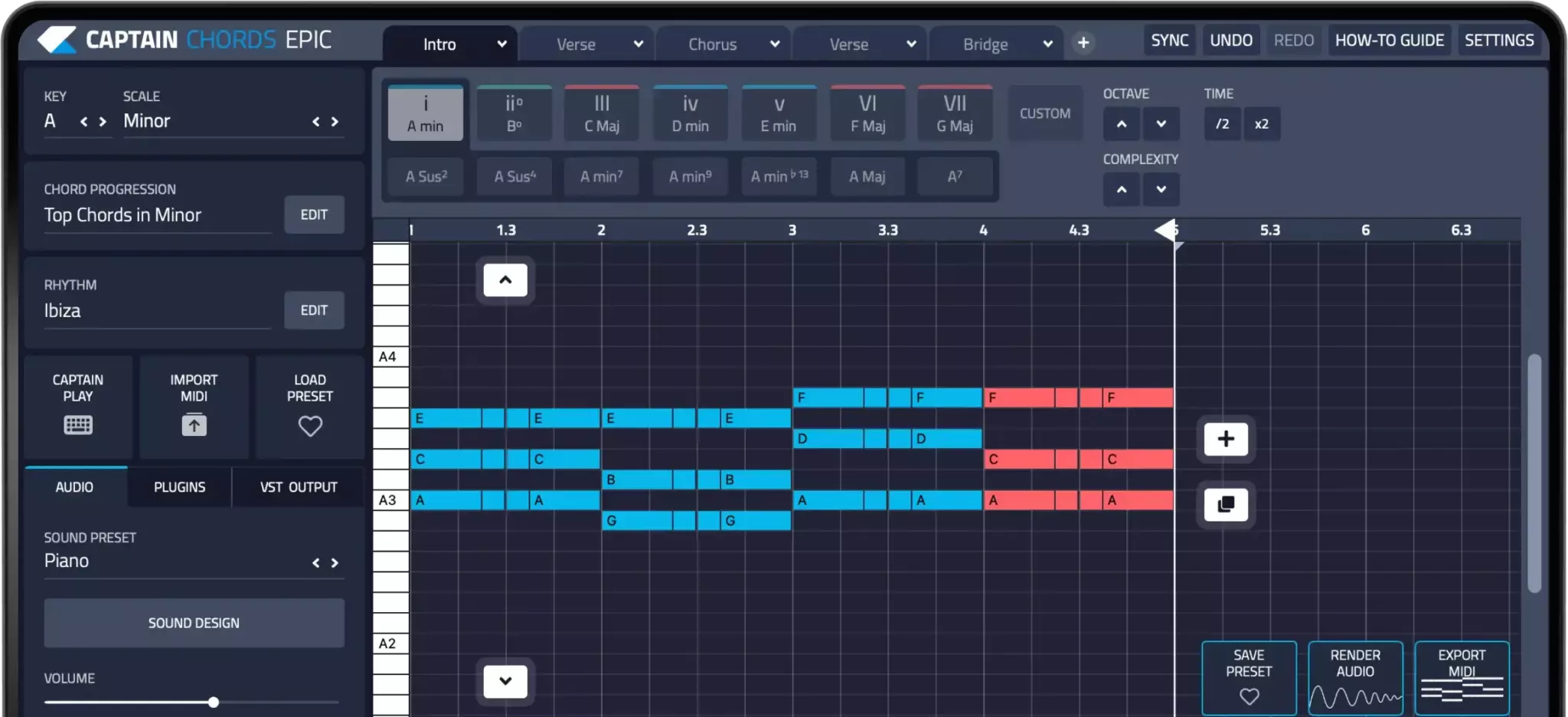
Use Captain Chords to sketch the harmony, edit its voicing and rhythm, then develop the arrangement in your DAW.
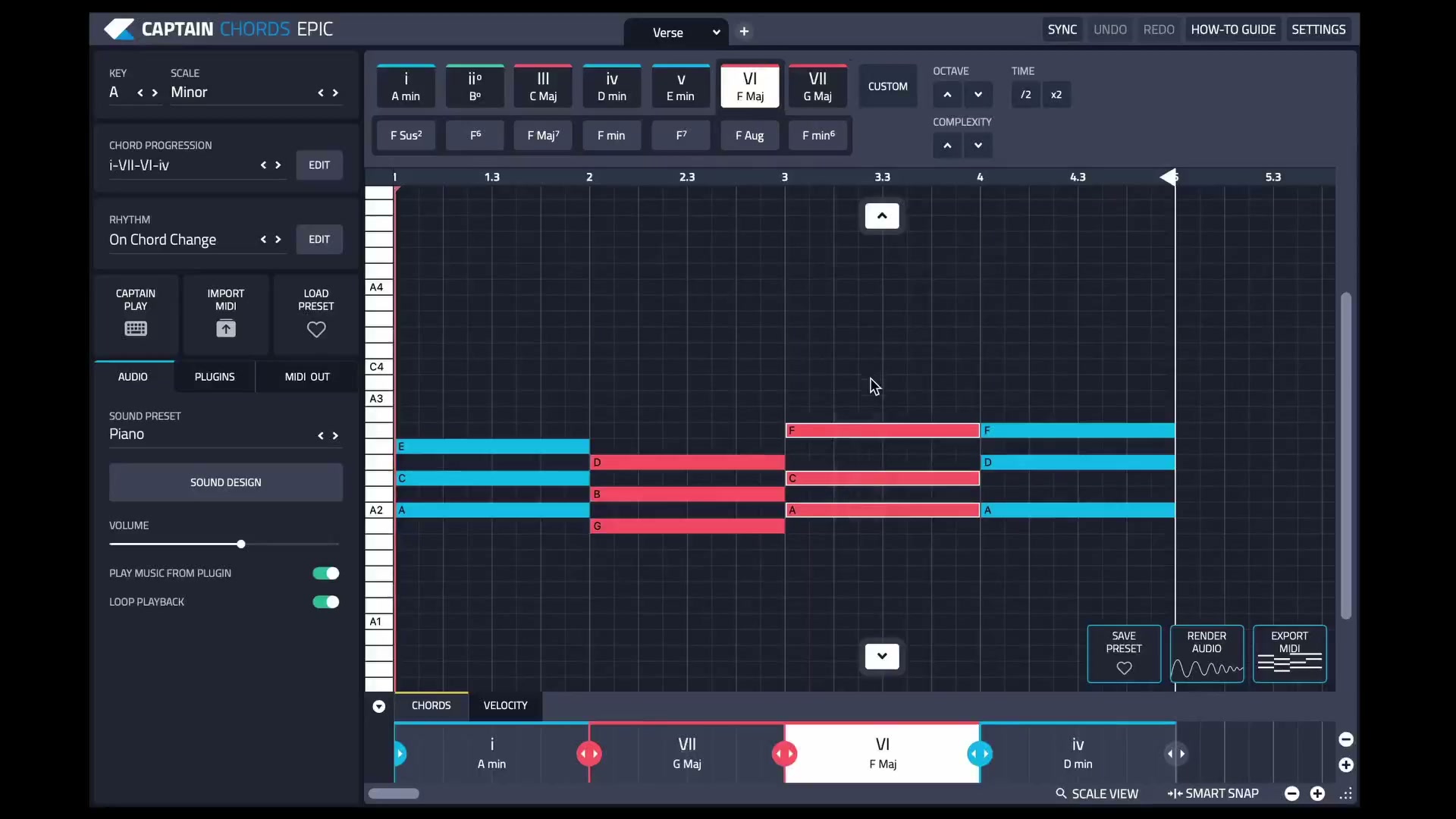
Captain Plugins 8 overview
See the update video for the current canvas and editing workflow.
Common questions
Is C major always the easiest key?
It is visually simple on a piano because its scale uses white keys. Comfortable keys for singers, guitarists and other instruments may differ.
Can I use an F minor chord in C major?
Yes, as a borrowed chord or another deliberate harmonic choice. Its A-flat is outside the C major scale, so listen to how it changes the line and resolves.