


In this article
You can study the production ideas behind a synth soundtrack without recreating its melody. Focus on the roles of the arpeggio, bass, sustained harmony and filter movement, then apply those techniques to your own notes and arrangement.
Separate the musical roles
Listen to a reference and identify which part supplies the pulse, which establishes the low end and which adds sustained atmosphere. Do not try to build every role into one large preset. Separate parts give you control over register, movement and entrances, making it easier to develop a short pattern into a complete cue.
Create an original arpeggio
For a practice pattern unrelated to the theme’s melody, use D, F, A and C in a repeating order of your own. Start with evenly spaced notes, then alter one rest or accent. Keep the pattern simple enough that timbre changes are audible. Save the MIDI before experimenting so the original phrase remains easy to compare.
Shape the synth with envelopes and filtering
Begin with a basic oscillator sound, a low-pass filter and a short amplitude envelope. Use a modest filter-envelope movement to define each note’s attack. Then change the cutoff gradually across several bars. The exact settings depend on the instrument and register; listen for a developing texture rather than copying numbers from another synth.
Keep the bass simpler than the arpeggio
A held or repeated D can establish a foundation while the upper pattern moves. Try changing the bass to B♭ for one phrase and hear how the same upper material changes context. Check any sustained notes against the new bass. The exercise is about harmonic reinterpretation, not assuming that one arpeggio fits every root equally well.
Add a pad only when it supplies a new role
Use a quiet sustained layer to connect sections or widen the texture. Keep it away from the bass register and reduce its movement if it competes with the arpeggio. A small amount of detuning or modulation can add life, but excessive pitch instability may make the harmony unclear. Listen with the pad muted to confirm its contribution.
Build the cue through entrances and exits
Start with one role, introduce the bass, then bring in the sustained layer at a clear phrase boundary. Remove something before the final return. A short soundtrack-style cue can develop through filtering, register and density without needing a new chord every bar. Export the result and check that the ending feels intentional.
Try this in your project
Write an original eight-note arpeggio using D, F, A and C. Arrange thirty-two bars with a simple bass and one pad. Use only one slow filter change and three layer entrances or exits, then listen without looking at the automation lanes.
Quick reference
| Focus | What to try | What to listen for |
|---|---|---|
| Arpeggio | Write your own repeating note order | A clear pulse and identity |
| Sound | Develop filter and envelope movement | A texture that changes over time |
| Arrangement | Give bass, pattern and pad separate roles | Depth without every layer doing the same job |
Work with Captain Chords
Use Captain Chords to sketch the harmony, edit its voicing and rhythm, then develop the arrangement in your DAW.
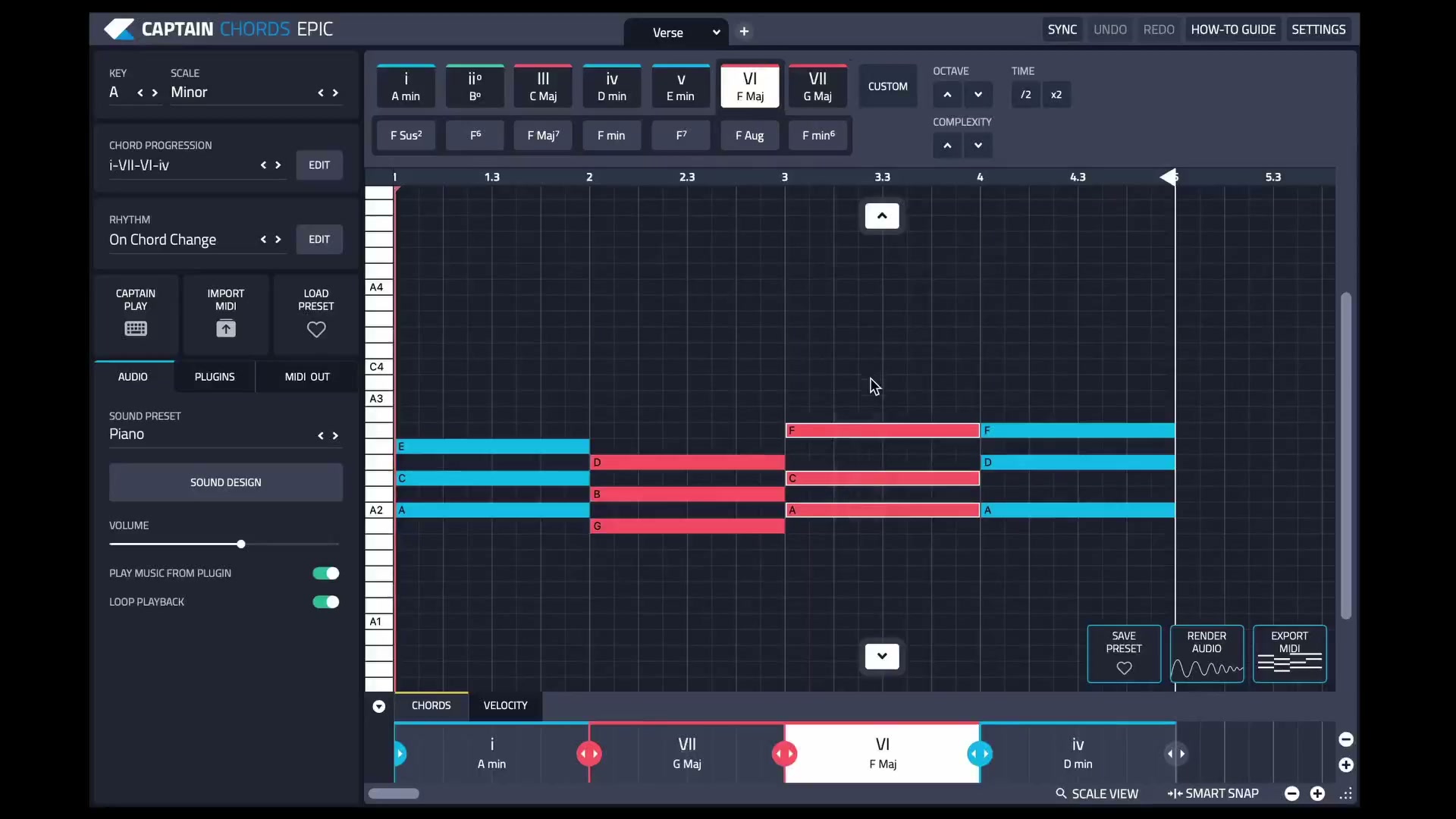
Captain Plugins 8 overview
See the update video for the current canvas and editing workflow.
Common questions
Does this exercise reproduce the Stranger Things melody?
No. It uses original practice material to explore general synth and arrangement techniques.
Do I need the exact synthesizer used in a soundtrack?
No. A synth with suitable oscillators, filtering and envelopes can demonstrate the techniques. Focus on the role of each sound and the musical result.